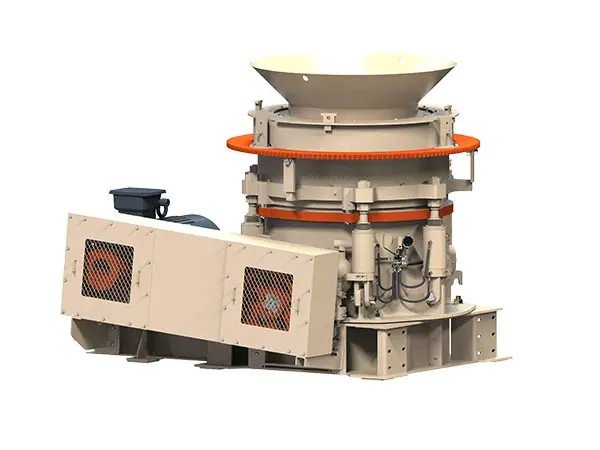
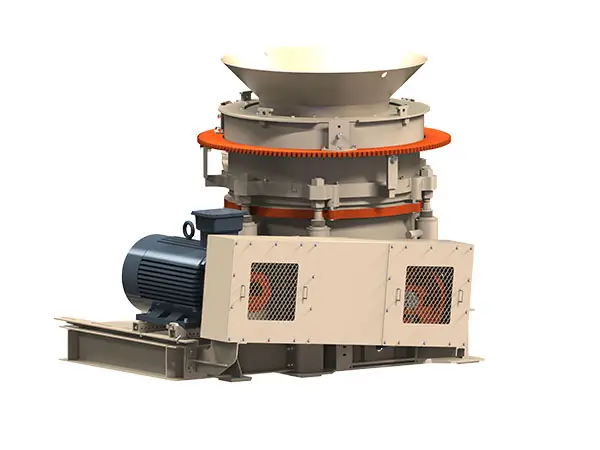
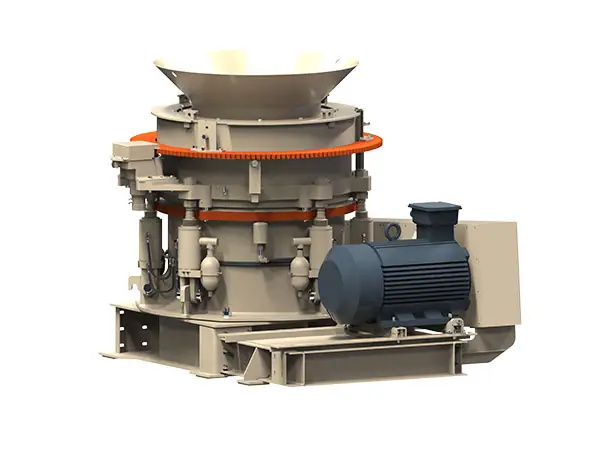
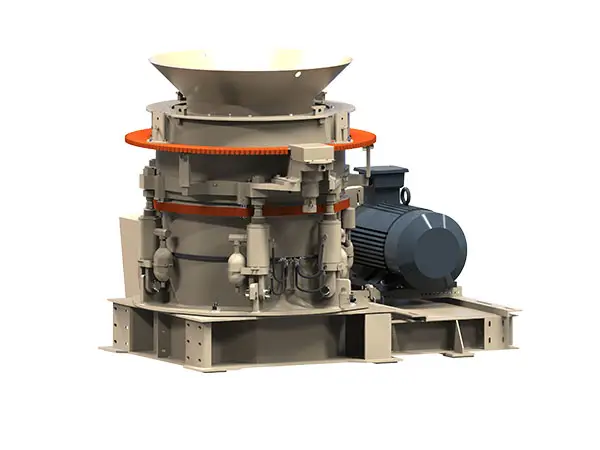
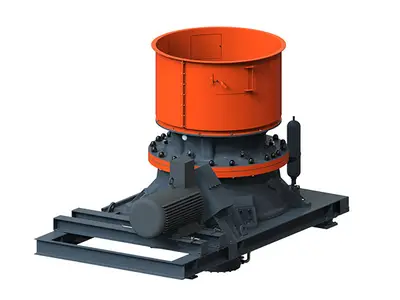
How Does the CHP Series Multi-Cylinder Hydraulic Cone Crusher Achieve Efficient Hard Rock Crushing?
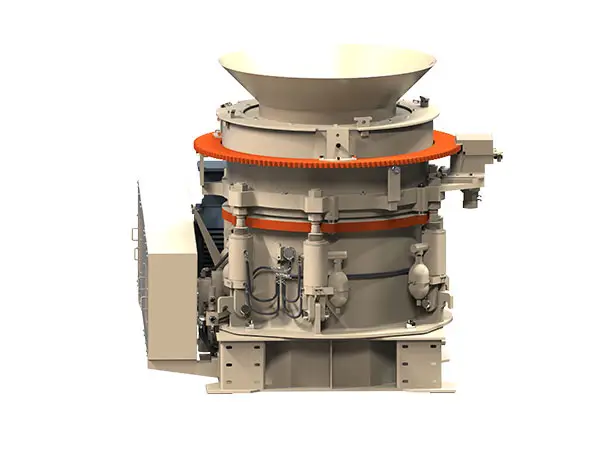
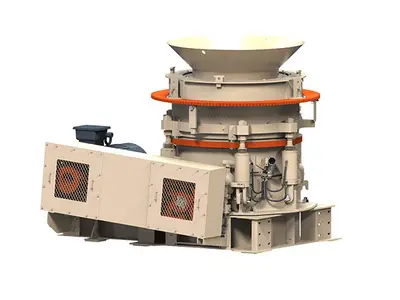
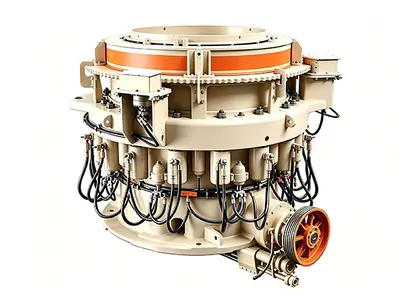
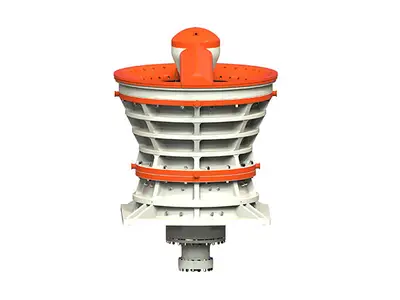
The CHP series multi-cylinder hydraulic cone crusher is a high-performance machine designed for fine and ultra-fine crushing of hard ores and rocks. It operates on a layered compression crushing principle, where the motor drives the horizontal shaft via a V-belt and pulley, which in turn rotates the eccentric sleeve assembly through a spiral bevel gear. This motion causes the crushing cone to perform a gyratory movement, creating periodic relative motion between the moving cone liner and the fixed cone liner. The material is continuously squeezed and bent within the crushing chamber, resulting in effective size reduction. The series includes ten models: CHP100, CHP200, CHP300, CHP400, CHP500, CHP800, CHP900, CHP3, CHP4, and CHP6, with maximum recommended power ranging from 90 kW to 700 kW and drive shaft speeds from 700 to 1200 rpm. The hydraulic cylinder pre-compression technology maintains a constant discharge port, ensuring stable operation and high throughput. This design achieves a high crushing ratio and excellent product particle shape, making it suitable for processing river pebbles, granite, basalt, limestone, dolomite, and various metallic and non-metallic ores.
The CHP series is widely applied in medium and fine crushing operations across industries such as metallurgy, mining, aggregates, cement, water conservancy, construction materials, chemicals, and transportation. Its wide adaptability is a key advantage: the product line includes standard and short-head models, each with multiple cavity types that can be changed by replacing just a few parts like the liner, pulley, and auxiliary ring. The product gradation can be adjusted by changing the drive shaft speed, allowing operators to maximize the value of existing equipment. The automated control system provides overload protection, iron overload protection, discharge port adjustment, and synchronous cavity clearing. It also monitors oil temperature, oil pressure, flow rate, load, and discharge port size in real time, ensuring reliable operation. With low operating costs due to durable liner materials and easy maintenance access from the top and side, the CHP series delivers a cost-effective solution for hard rock crushing.
Compared to other models in the series, each CHP model offers distinct capacities and specifications tailored to specific production needs. For instance, the CHP100, with a crusher weight of 5,400 kg and maximum power of 90 kW, is ideal for smaller-scale operations, delivering 45-140 t/h depending on the discharge port setting. The CHP900, weighing 77,960 kg with 700 kW power, handles the largest capacities, up to 1200 t/h. The CHP3, CHP4, and CHP6 models bridge the gap with weights of 13,040 kg, 19,810 kg, and 33,000 kg respectively, and power ratings of 250 kW, 315 kW, and 450 kW. The integral steel base frame structure simplifies installation, reducing foundation investment. The high-precision bevel gear transmission ensures lower noise, higher efficiency, and longer service life. The combination of an integral steel frame and flexible supports minimizes vibration transmitted to the foundation. These features make the CHP series a reliable and efficient choice for demanding crushing applications.
- High productivity: Layered compression crushing with hydraulic cylinder pre-compression ensures constant discharge port, large throughput, and lower energy consumption.
- Wide adaptability: Standard and short-head models with multiple cavity types; adjustable gradation via drive shaft speed changes.
- High automation: Real-time monitoring of oil temperature, pressure, flow, load, and discharge port size; overload and iron overload protection.
- Low operating costs: Durable liner materials and easy disassembly from top and side for safer, more efficient maintenance.
- Low installation cost: Integral steel base frame structure simplifies installation and reduces foundation investment.
- High load-bearing capacity: Reinforced frame, high-strength cantilever fixed-axis structure, and copper bushing hydrodynamic lubrication for long-term stability.