How Does the CJ Series Jaw Crusher Achieve 150-500 t/h Throughput?
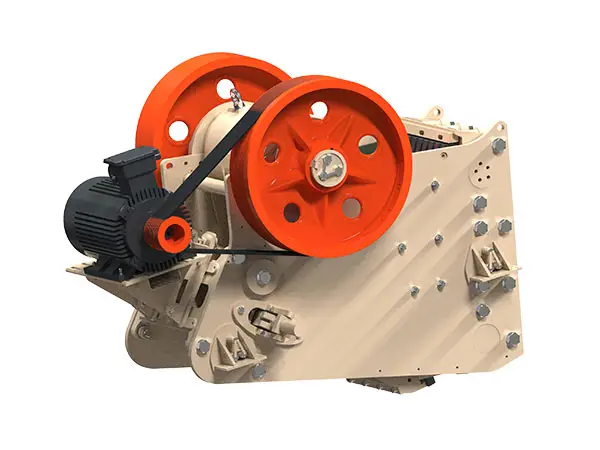
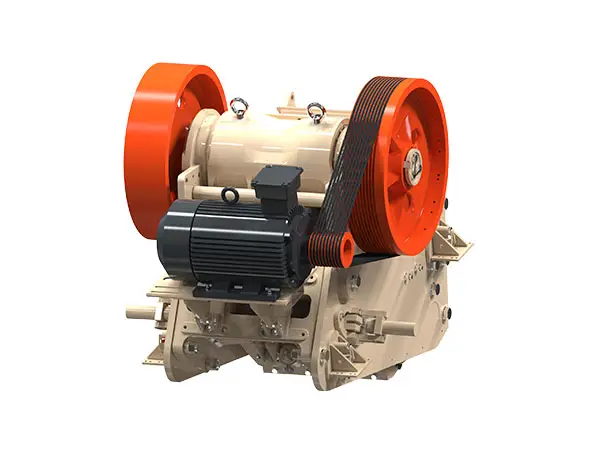
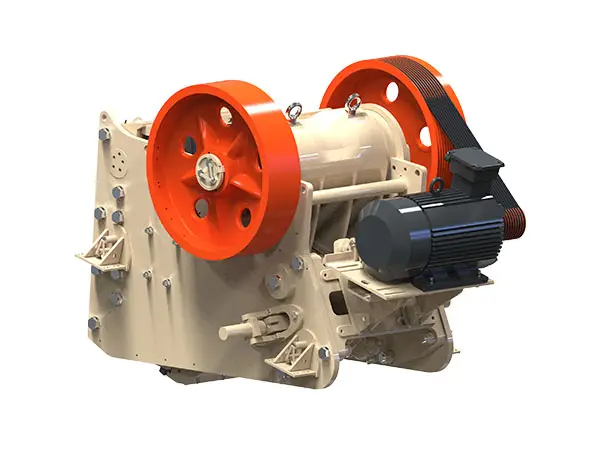
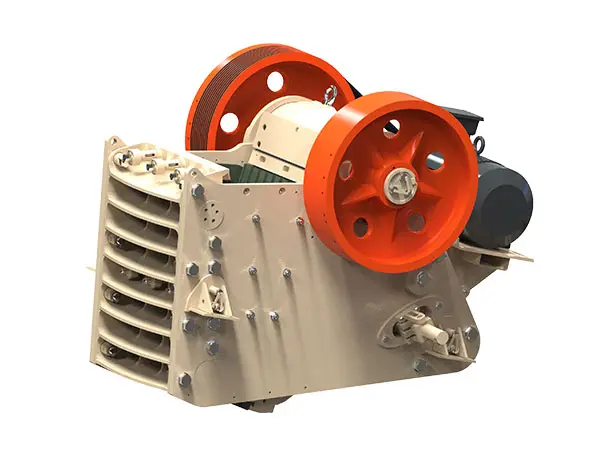
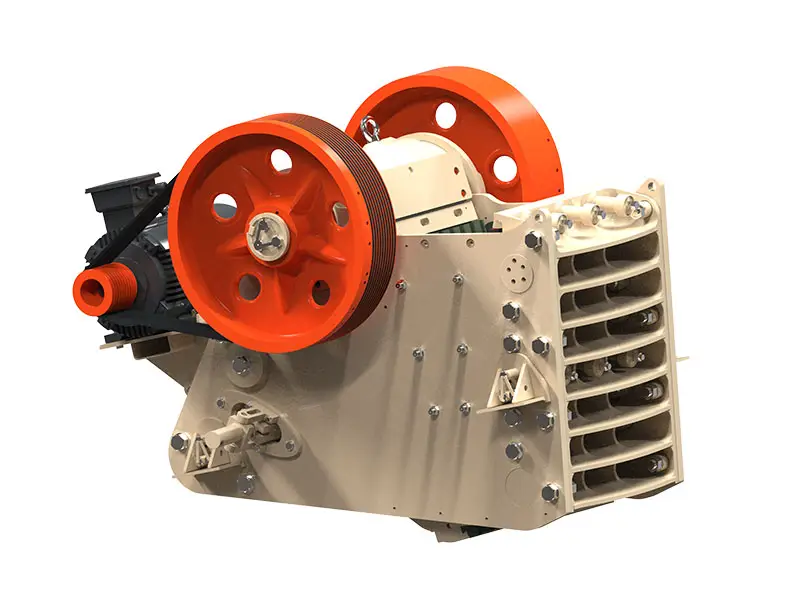
The CJ series jaw crusher is defined by its 1060 mm by 760 mm feed opening, which sets the maximum feed size at 640 mm. This geometry, combined with a 250 rpm eccentric shaft speed and a 110 kW drive motor, produces a throughput range of 150 to 500 tonnes per hour. The crusher's motion is driven by a forged eccentric shaft mounted in spherical roller bearings, which handle both radial and axial loads. The crushing chamber features a steep nip angle that ensures a continuous material flow without bridging. The jaw plates are made from high-manganese steel (Mn18Cr2), offering a work-hardening surface that resists abrasion when processing abrasive rocks like granite and basalt. The discharge setting is adjusted via hydraulic wedges, allowing changes from 100 mm to 200 mm in minutes, not hours. This level of control is critical for operations that need to switch between product sizes or compensate for wear.
Typical applications for this specific model include primary crushing in hard rock quarries, recycling of construction and demolition waste, and ore processing in mining operations. In a quarry producing 300 tonnes per hour of 0-300 mm aggregates, the CJ 1060x760 can serve as the primary crusher, reducing run-of-mine rock from 600 mm to a 150 mm product for secondary crushing. In recycling, it handles reinforced concrete with rebar, thanks to its robust frame and ability to pass uncrushable material through a tramp iron relief system. The high throughput and large feed opening reduce the need for secondary breaking, lowering overall operating costs. The crusher's compact footprint relative to its capacity makes it suitable for mobile track-mounted plants, where space and weight are constrained.
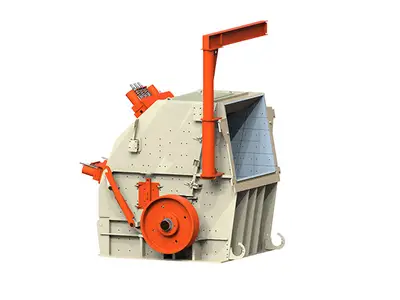
Compared to smaller jaw crushers in the CJ series, such as the 760x510 model, this 1060x760 unit offers a 40% larger feed opening and up to 2.5 times the capacity. This makes it the preferred choice for medium-to-large scale operations that require a single primary crusher to handle the entire feed. Unlike impact crushers, the jaw crusher's compression crushing action produces less fines and is more effective on hard, abrasive materials. The CJ 1060x760 also features a more robust frame and larger bearings than its smaller siblings, ensuring a longer service life under continuous duty. For operations that need to process 500 tonnes per hour, this model can be configured with a larger motor and optimized jaw plates to achieve that top-end capacity.
- Hydraulic wedge adjustment allows discharge setting changes from 100 mm to 200 mm in under 10 minutes, reducing downtime by up to 70% compared to shim adjustment.
- Reversible jaw plates (Mn18Cr2) provide up to 1,500 hours of wear life on abrasive feed, and can be flipped to use the other side, cutting plate costs by 50%.
- Spherical roller bearings (240/600 series) with a dynamic load rating of 3,600 kN support the eccentric shaft, ensuring reliable operation even under extreme radial loads.