Non-Metal & Industrial Minerals01

Advanced Crushing & Screening Solutions for Non-Metal and Industrial Minerals

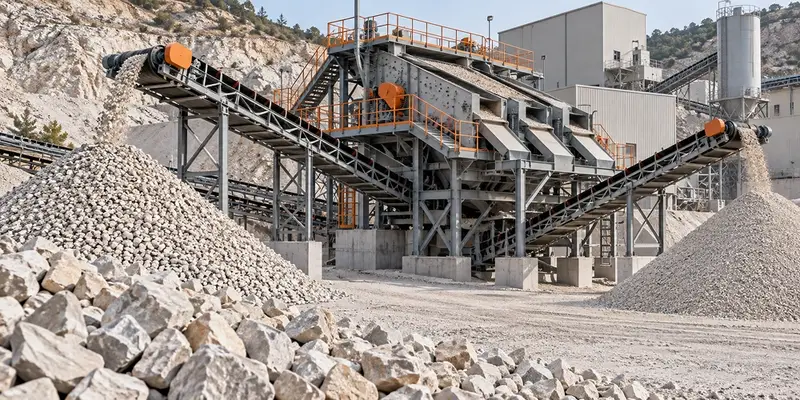
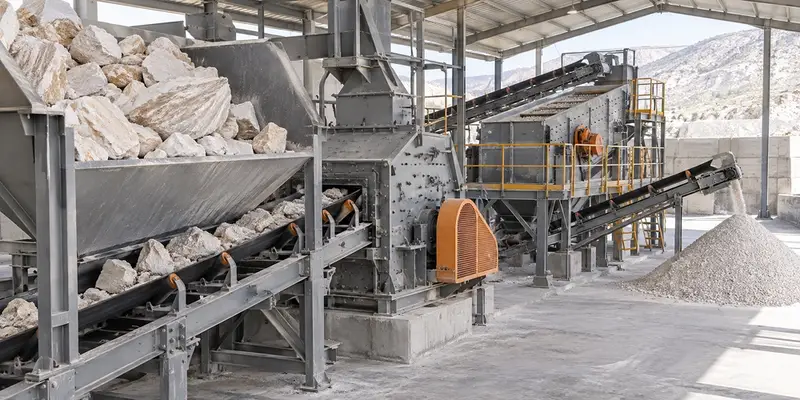
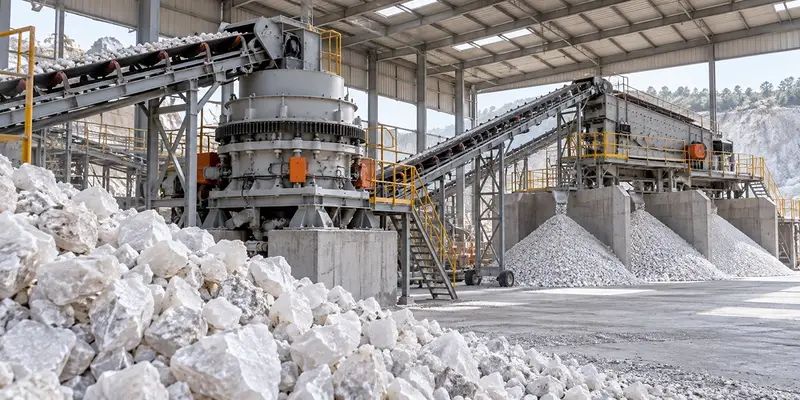
Hilook delivers high-performance crushing and screening equipment engineered for limestone, gypsum, quartz, feldspar, mica, talc, and more. Achieve precise size reduction and efficient mineral processing with our customized systems.

Overview

Crushing & Screening in Non-Metal and Industrial Minerals Processing

Our goal is to help customers establish a stable processing system that delivers consistent material sizes, reliable throughput and practical operating performance.

STEP 1

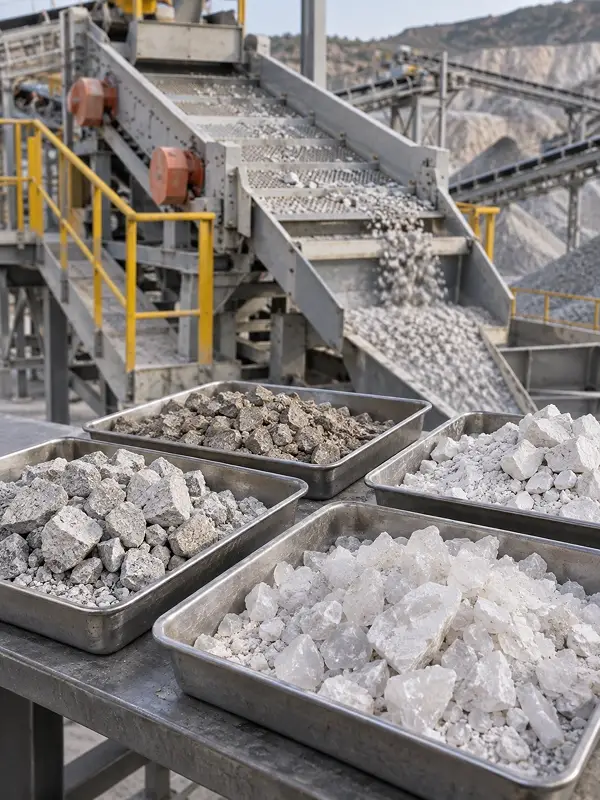
Non-metallic minerals play an important role in construction materials, ceramics, glass, chemicals, agriculture, refractories and many other industrial applications. Unlike metal ores, these materials are often processed not for metal recovery, but to achieve a specific particle size, shape, grading or physical property required by the final application.
STEP 2

Limestone, gypsum, dolomite, quartz, feldspar, barite, kaolin and other industrial minerals can have very different levels of hardness, abrasiveness, moisture content and material structure. These differences directly affect crusher selection, screening performance and the overall design of the processing system.

STEP 3

As a manufacturer of jaw crushers, cone crushers, vibrating screens and related mining equipment, we provide crushing and screening solutions that are developed around the characteristics of the raw material and the requirements of the finished product.

Challenges

Challenges in Non-Metallic Mineral Processing

Non-metallic minerals cover a broad range of materials, and each material can behave differently during crushing and screening. Limestone and dolomite may require relatively straightforward size reduction, while quartz and some other siliceous minerals can create greater wear on crushing components. Gypsum has different crushing characteristics again because excessive crushing can generate unwanted fines. For this reason, selecting equipment only according to nominal capacity is not enough. The crushing solution should take into account material hardness, abrasiveness, feed size, moisture, required reduction ratio and final product requirements.

Industrial mineral customers often sell or consume material according to clearly defined particle-size ranges. A product that contains excessive oversize or fines may not meet the requirements of a particular application. The screening system therefore plays an important role in maintaining product consistency. Screen configuration, deck arrangement and operating parameters should be matched with the required product sizes and material characteristics.

Many industrial mineral plants operate continuously to supply raw materials to downstream manufacturing processes. Unstable feeding, crusher overload or insufficient screening capacity can interrupt material flow and affect production schedules. Our equipment combinations are designed with system compatibility in mind so that the feeder, crusher and screen can work together under the expected operating conditions.

Some industrial minerals have a relatively soft or friable structure. Excessive crushing can generate more fines than the final application requires. A suitable crushing configuration can reduce the material to the required size without unnecessarily increasing the amount of fine material. This consideration can be particularly important for minerals such as gypsum, limestone and other materials where product grading influences their commercial value or downstream use.

Product Series Introduction

Equipment for Non-Metal & Industrial Minerals

Hilook offers a comprehensive portfolio of crushing and screening equipment, including jaw, cone, impact, hammer, and roller crushers, as well as vibratory screens, trommels, and high-frequency screens. Each product line is engineered for specific mineral processing needs.
01

Jaw Crusher

CJ Series Jaw Crusher

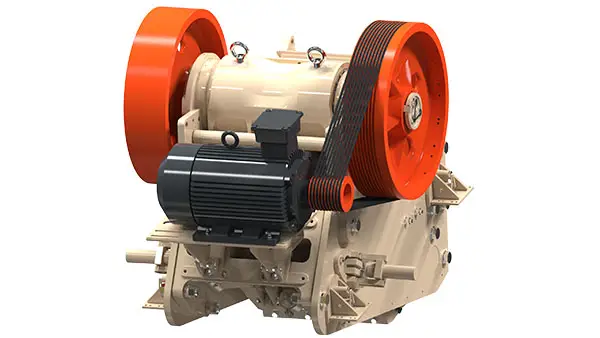
Our jaw crusher provides a robust solution for primary crushing when the raw material contains relatively large particles.
The equipment can be used for limestone, dolomite, quartz, feldspar and other mineral materials where the initial feed needs to be reduced before further processing.
The primary crushing stage can also help prepare a more suitable feed condition for secondary crushing or screening equipment.

View More
02

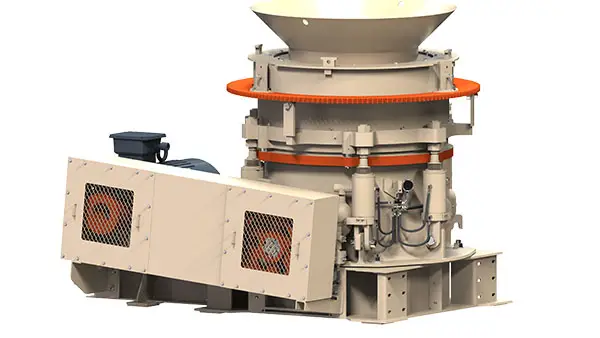
Cone Crusher

CHP Series Multi-Cylinder Hydraulic Cone Crusher

Our cone crusher can provide secondary or tertiary size reduction when the material requires a smaller and more controlled product size.
For harder and more abrasive industrial minerals, the cone crusher can provide a suitable solution for further reduction after primary crushing. The final configuration depends on material properties, required capacity and product specification.

View More
03

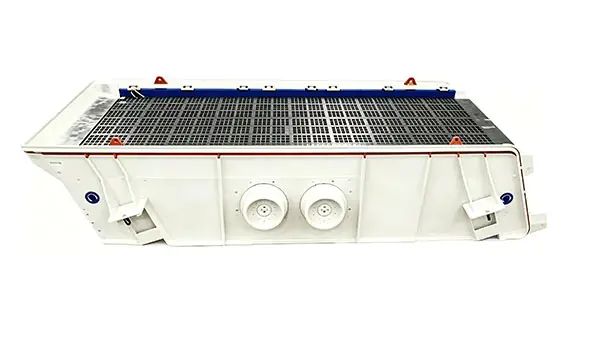
Vibrating Screen

CRF Series Circular Vibrating Screen

Our vibrating screen is responsible for separating crushed mineral material into different particle-size fractions.
The screen can be configured with different deck arrangements according to the required output sizes. For applications requiring multiple finished products, a multi-deck vibrating screen can separate several size fractions within the same screening stage.
The screen selection also considers material characteristics and moisture because these factors can influence screening efficiency.

View More
04

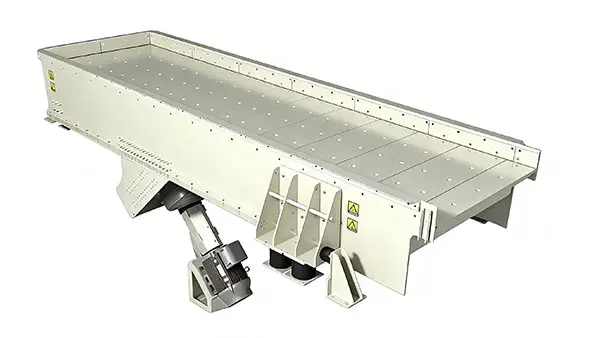
Vibrating Feeder

CPF coarse trough feeder

Our vibrating feeder provides controlled material delivery to the crushing system.
By regulating the feed rate, the feeder can help reduce sudden loading fluctuations and support more stable crusher operation. The feeding system can also be adapted to different material-handling requirements and plant layouts.

View Case
Non-Metal & Industrial Minerals03
Applications Across Industrial Minerals
Limestone

Limestone is widely used in cement production, construction materials, aggregates, lime manufacturing and various industrial processes.
Our crushing and screening equipment can help limestone producers reduce raw material to the particle sizes required by their specific application.
The final configuration can be adjusted according to feed size, production capacity and whether the customer requires a single product size or several graded products.

Non-Metal & Industrial Minerals04
Applications Across Industrial Minerals
Dolomite

Dolomite is used in refractory materials, glass manufacturing, construction materials and metallurgical applications.
Because different applications require different particle sizes, the crushing and screening system needs to provide reliable size control. Our equipment can be configured according to the required feed and finished-product specifications.

Non-Metal & Industrial Minerals05
Applications Across Industrial Minerals
Gypsum

Gypsum is commonly used in plasterboard, cement, plaster and other building-material applications.
Gypsum can have different crushing characteristics from harder industrial minerals, so the processing system should avoid unnecessary size reduction where excessive fines are undesirable.
A suitable combination of crushing and screening equipment can provide controlled particle-size preparation for subsequent processing.

Non-Metal & Industrial Minerals06
Applications Across Industrial Minerals
Quartz

Quartz is an important raw material for glass, ceramics, engineered stone, silicon-related industries and other applications.
Quartz-containing materials can be abrasive, which makes crusher selection and wear management important considerations. Our equipment configuration can be developed around the material's hardness, abrasiveness and required product size.

WHY CHOOSE US

Why Choose Our Industrial Mineral Crushing Equipment?

Hilook equipment is engineered for high efficiency, low operating costs, and long service life. Our advanced designs and automation systems deliver reliable performance in the most demanding industrial mineral applications.

Equipment for Diverse Mineral Materials

Our crushing and screening equipment can be configured for a wide range of non-metallic and industrial minerals, from relatively soft materials to hard and abrasive mineral resources.

Focus on Product Size

We consider the required finished-product specification when selecting the crushing and screening combination, helping customers achieve more consistent material grading.

Flexible Equipment Combinations

Jaw crushers, cone crushers, vibrating screens and feeding equipment can be combined according to the project's actual requirements instead of following a fixed equipment list.

Balanced Crushing and Screening

We consider the capacity relationship between individual machines so that the crushing and screening stages can maintain a more balanced material flow.

Practical Maintenance Design

Maintenance access, wear components and equipment arrangement are considered during solution development to support long-term plant operation.

Support for Different Project Scales

The equipment configuration can be adapted to different production capacities and site conditions, making the solution suitable for both individual processing lines and larger industrial mineral plants.

bg01
CONTACT US
Ready to Optimize Your Industrial Minerals Processing?
Contact Hilook today to discuss your project requirements. Our experts will help you design the ideal crushing and screening solution for your non-metal minerals.

    Get a quick quote

    We typically confirm within 24 hours.

    FAQ

    Everything you need to know

    What are non-metal and industrial minerals?

    Non-metal and industrial minerals are naturally occurring mineral resources that are mainly used for their physical or chemical properties rather than for extracting metals. Common examples include limestone, gypsum, dolomite, quartz, feldspar, barite, kaolin and silica-based materials.
    These minerals are widely used in construction materials, cement, ceramics, glass, chemicals, refractories, drilling fluids and other industrial applications. Their different hardness, abrasiveness, moisture content and particle structures require different crushing and screening approaches.

    Can your crushing equipment process limestone, dolomite and gypsum?

    Yes. Our crushing and screening equipment can be configured for a variety of non-metallic minerals, including limestone, dolomite and gypsum.
    However, these materials have different crushing characteristics. Limestone and dolomite may require different crushing configurations depending on their hardness and application, while gypsum may require careful control of crushing intensity when excessive fines are undesirable.
    The final equipment selection should therefore be based on the actual material properties and required product specification.

    What role does a vibrating screen play in industrial mineral processing?

    A vibrating screen separates crushed mineral material into different particle-size ranges.
    Industrial mineral applications often require specific product sizes because the final material may be used in ceramics, glass, construction materials, chemicals or other manufacturing processes.
    The screen can therefore be selected according to the required separation sizes, processing capacity, material characteristics and number of finished products. Multi-deck vibrating screens can be used when several size fractions are required.

    What crushing equipment is suitable for industrial minerals?

    The appropriate crushing equipment depends on the mineral type, feed size, hardness, required capacity and final product size.
    A Jaw Crusher is commonly used for primary crushing when the raw material contains relatively large pieces. A Cone Crusher can be used for secondary or tertiary crushing when the material requires further size reduction and controlled particle sizes.
    Our engineers can recommend the equipment combination according to the customer's material characteristics and production requirements rather than applying the same configuration to every industrial mineral project.

    Can your equipment handle hard and abrasive industrial minerals such as quartz?

    Yes. Our crushing solutions can be configured for hard and abrasive industrial minerals such as quartz and certain feldspar-containing materials.
    For abrasive materials, we consider factors such as material hardness, abrasiveness, feed size, production capacity and expected operating conditions when selecting the crusher and wear components.
    A suitable equipment configuration can help maintain stable crushing performance while allowing the customer to manage wear-part consumption more effectively.

    Can your crushing and screening system produce multiple product sizes?

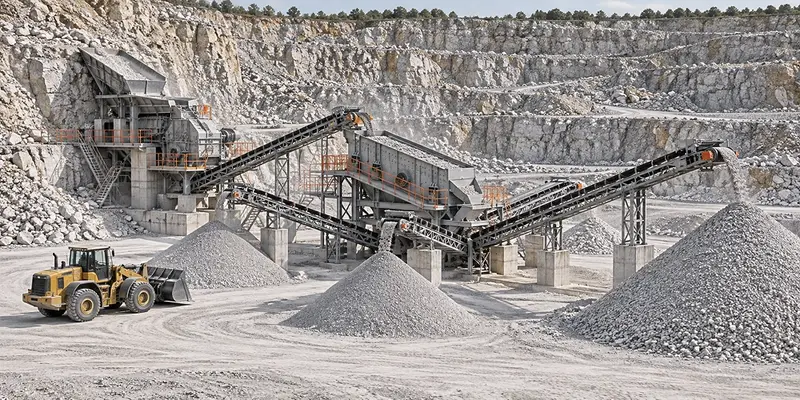
    Yes. A properly configured crushing and screening plant can produce several aggregate or mineral product sizes from the same raw material.
    A multi-deck vibrating screen can separate material into different size ranges, while the crushing stages can be adjusted according to the required product grading.
    The number of finished products and their specifications should be confirmed before equipment selection because these requirements directly influence the screen configuration and overall crushing circuit.