In a mining or aggregate processing plant, the feeding system determines how consistently raw material reaches the crushing and screening stages. A properly selected feeder can help regulate material flow, protect downstream equipment from sudden surges, and improve the overall stability of the production line.
Among the equipment commonly used for bulk material handling, vibrating feeders and grizzly feeders are two widely used options. Although both machines use vibration to move materials, they are not designed for exactly the same operating conditions.
A vibrating feeder generally focuses on controlled and continuous material feeding, while a grizzly feeder combines feeding with pre-screening of fines and undersized material. Understanding this difference is important when designing a crushing plant, selecting equipment for a quarry, or upgrading an existing mineral processing system.
This guide explains the key differences between vibrating feeders and grizzly feeders, their working principles, applications, advantages, and the factors that should be considered before choosing one for a specific operation.
What Is a Vibrating Feeder?
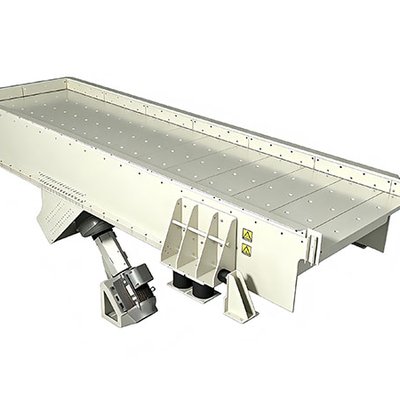
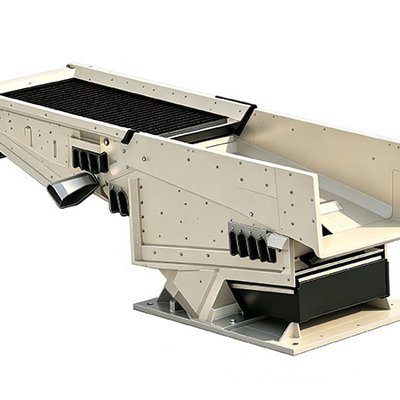
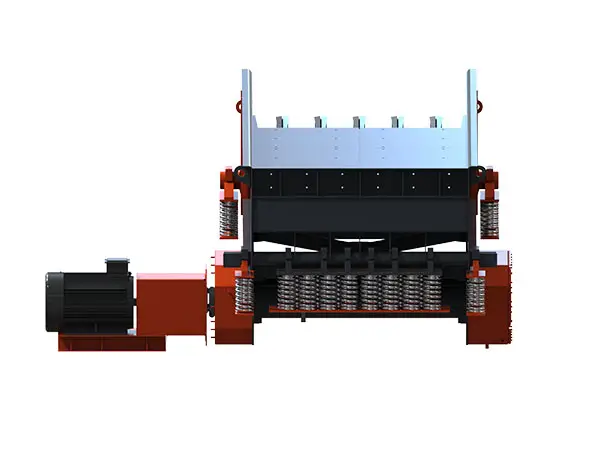
A vibrating feeder is a mechanical feeding machine that uses controlled vibration to move bulk materials from a hopper or storage bin to downstream equipment.
The vibration causes the material to move forward along the feeder deck at a controlled rate. Depending on the equipment design, the vibration can be generated by electromagnetic drives, eccentric blocks, or other mechanical excitation systems.
Vibrating feeders are commonly installed before jaw crushers, cone crushers, impact crushers, screens, conveyors, and other processing equipment.
The main purpose of a vibrating feeder is to maintain a stable and adjustable material flow. Instead of allowing material to enter the crusher irregularly from a storage hopper, the feeder meters the feed and helps maintain a more consistent load.
How Does a Vibrating Feeder Work?
The basic operating process is relatively straightforward.
Raw material enters the feeder from a hopper or stockpile.
The vibration system generates a controlled oscillating movement.
The material moves gradually along the feeder deck.
The discharge end delivers the material to the crusher or conveyor.
The feeding rate can be adjusted according to the requirements of the processing line.
This controlled movement makes vibrating feeders particularly useful when a crushing or processing system requires a stable feed rate.
What Is a Grizzly Feeder?
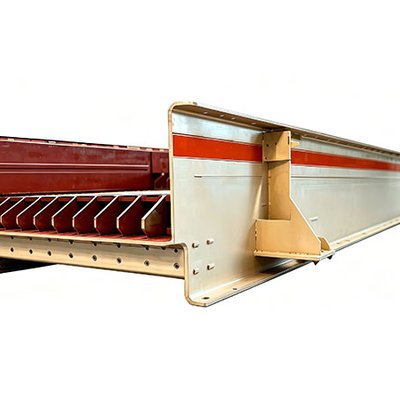
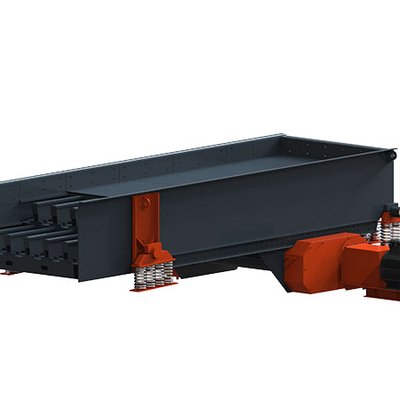
A grizzly feeder is a heavy-duty vibrating feeder equipped with a grizzly section consisting of spaced bars or rails. These bars allow smaller particles and fines to pass through before the remaining oversized material reaches the primary crusher.
This design gives the grizzly feeder two functions:
Feeding material at a controlled rate
Removing a portion of fines and undersized material before crushing
Grizzly feeders are therefore frequently used in the primary crushing stage, especially when the feed contains a considerable amount of soil, fines, or small rocks.
For example, material extracted directly from a quarry or mine may contain a mixture of large rocks, small particles, clay, and other unwanted fines. Sending all of this material directly into a primary crusher can increase the workload of the crusher and reduce crushing efficiency.
A grizzly feeder can separate part of the smaller material before it reaches the crusher.
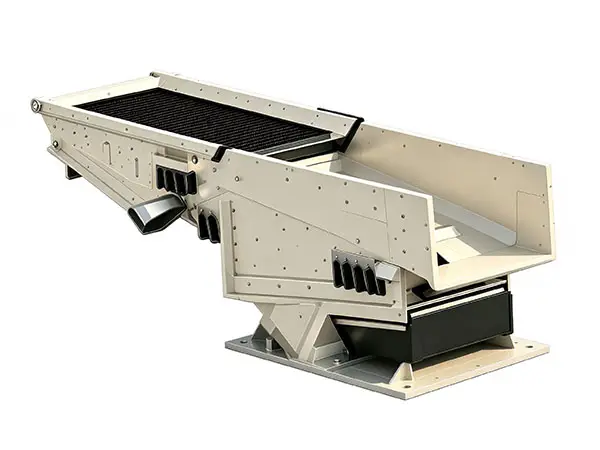
Vibrating Feeder vs Grizzly Feeder: What Is the Difference?
Although the two machines share similar vibration-based conveying principles, their main difference lies in material separation and application requirements.
Main function
Vibrating Feeder: Controlled material feeding
Grizzly Feeder: Feeding + pre-screening
Grizzly bars
Vibrating Feeder: Usually not included
Grizzly Feeder: Standard design feature
Fine material removal
Vibrating Feeder: General material feeding
Grizzly Feeder: Primary crushing
Typical application
Vibrating Feeder: Usually not included
Grizzly Feeder: Standard design feature
Feed material
Vibrating Feeder: Aggregates, minerals, bulk materials
Grizzly Feeder: Large rocks with fines and soil
Crusher protection
Vibrating Feeder: Provides stable feed
Grizzly Feeder: Helps reduce unnecessary fines entering crusher
Heavy-duty capability
Vibrating Feeder: Depends on design
Grizzly Feeder: Commonly designed for heavy-duty operation
Typical installation
Vibrating Feeder: Hoppers, conveyors, crushers
Grizzly Feeder: Mainly before primary crushers
The most important distinction is that a standard vibrating feeder primarily controls material flow, while a grizzly feeder can also perform preliminary separation.
Feeding vs Feeding and Pre-Screening
A conventional vibrating feeder is primarily designed to move material at a controlled rate.
If the processing line needs to feed a jaw crusher continuously, the feeder controls how much material enters the crusher. This helps prevent sudden surges and reduces the risk of inconsistent loading.
A grizzly feeder adds another step to this process. Its grizzly bars create openings through which smaller particles can fall before the remaining larger rocks continue toward the crusher.
This feature can be particularly valuable when the raw material contains a significant amount of natural fines.
Different Requirements for Raw Materials
The characteristics of the raw material strongly influence the choice between the two machines.
A vibrating feeder can handle many types of bulk materials, including:
Crushed stone
Gravel
Aggregates
Coal
Ore
Sand-containing materials
Industrial bulk materials
A grizzly feeder is generally more suitable for large, irregular, and heavily contaminated feed material, particularly material coming directly from blasting or excavation.
When large rocks are mixed with dirt, clay, and smaller particles, the grizzly section can help remove part of the fines before primary crushing.
Different Roles in a Crushing Plant
A vibrating feeder can be installed at different points in a material handling system depending on the plant layout.
For example, a quarry may use a vibrating feeder between a feed hopper and a jaw crusher to regulate the material entering the crushing chamber.
A grizzly feeder is particularly common at the front end of a primary crushing plant.
A typical process may look like this:
Dump Truck → Hopper → Grizzly Feeder → Jaw Crusher → Conveyor → Screening System
The grizzly feeder receives the raw material, separates a portion of the fines, and sends the larger material to the primary crusher.
This arrangement can reduce the amount of material that needs to pass through the crusher.
When Should You Use a Vibrating Feeder?
A vibrating feeder can be a suitable choice when the primary requirement is stable, controlled, and continuous feeding.
Applications of Vibrating Feeders
Vibrating feeders are commonly used in:
Mining
Mining operations use vibrating feeders to transfer ore from storage hoppers to crushers, conveyors, or other processing equipment.
The controlled feeding rate can help maintain a stable production process and prevent excessive material accumulation.
Aggregate Production
Quarries and aggregate plants often use vibrating feeders to deliver stone and gravel to crushing and screening equipment.
The feeder can help maintain a consistent supply of material to the crusher, which is important for stable plant operation.
Coal Handling
Vibrating feeders can also be used for controlled coal feeding in bulk material handling systems.
The equipment can provide a regulated flow between storage facilities and downstream processing or conveying equipment.
Industrial Material Handling
Depending on the design and material characteristics, vibrating feeders can transport a wide range of bulk industrial materials between different stages of a production line.
When Should You Use a Grizzly Feeder?
A grizzly feeder becomes particularly useful when the feed material contains large rocks together with a substantial amount of fines or unwanted smaller particles.
Applications of Grizzly Feeders
Grizzly feeders are widely associated with:
Hard-rock mining
Quarrying
Aggregate production
Primary crushing
Construction waste processing
Mineral processing
Large-scale bulk material handling
For example, a quarry may receive blasted rock directly from the extraction site. The material can contain rocks of different sizes as well as soil and smaller particles.
A grizzly feeder can separate some of the smaller material before the oversized rock enters the primary crusher.
This arrangement can help improve the utilization of the crushing equipment and reduce unnecessary processing of material that does not require primary crushing.
Vibrating Feeder vs Grizzly Feeder for Jaw Crusher
The jaw crusher is one of the most common primary crushers used in mining and aggregate production, so feeder selection is particularly important in this application.
A vibrating feeder can provide a steady feed to the jaw crusher when the incoming material is relatively consistent and pre-screening is not the main requirement.
A grizzly feeder, on the other hand, can be advantageous when the feed contains a high percentage of fines.
For example, if the raw material contains both 500 mm rocks and a large quantity of small particles, sending everything directly into the jaw crusher may increase unnecessary crushing work.
The grizzly section can allow smaller material to bypass the primary crushing zone while directing larger rocks toward the crusher.
Therefore, the decision should not be based simply on machine capacity. Operators should also consider feed size distribution, fines content, material moisture, clay content, required throughput, and downstream equipment configuration.
Key Factors to Consider When Choosing a Feeder
Selecting a feeder based only on the name of the equipment can lead to an unsuitable configuration. Engineers should evaluate the complete material-handling requirement.
Maximum Feed Size
The maximum size of the incoming rock is one of the most important parameters.
Large rocks require a feeder with a suitable deck structure, sufficient loading capacity, and adequate mechanical strength.
A heavy-duty grizzly feeder may be more appropriate for large blasted rocks than a standard light-duty vibrating feeder.
Required Capacity
The feeder should provide enough capacity to meet the required production rate.
When the feeder capacity is too low, it can become a bottleneck in the crushing line. When the feeder is significantly oversized, the additional investment and operating requirements may not provide corresponding benefits.
Capacity selection should therefore consider the complete production system rather than the feeder alone.
Percentage of Fines
The amount of fines in the feed is another critical factor.
If the raw material contains relatively little fine material, a standard vibrating feeder may provide the required feeding function.
If the material contains a large amount of fines, a grizzly feeder can provide additional separation before primary crushing.
Material Moisture and Clay Content
Wet and sticky material can behave differently from dry rock.
High moisture and clay content may cause material to adhere to surfaces or reduce the effectiveness of conventional separation.
When the feed contains sticky materials, the feeder and grizzly design should be selected according to the actual material properties rather than relying solely on theoretical capacity.
Crusher Type and Plant Layout
The feeder should match the downstream crusher.
For a jaw crusher used in primary crushing, engineers should evaluate the crusher inlet size, required feed rate, maximum lump size, and whether the crusher can accept bypassed fines.
The location of conveyors, transfer points, screens, and stockpiles should also be considered during the design stage.
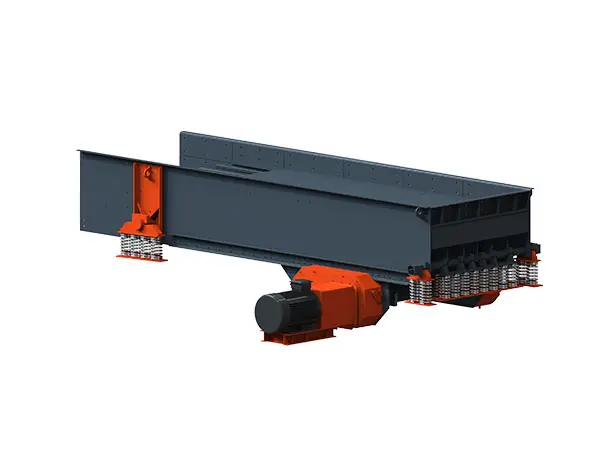
Advantages of Using a Vibrating Feeder
A properly selected vibrating feeder can provide several operational benefits.
Stable Material Flow
The feeder regulates the material entering the downstream equipment and helps reduce irregular loading.
Adjustable Feeding Rate
Many vibrating feeder designs allow operators to adjust the feed rate according to production requirements.
Compact Integration
Vibrating feeders can be integrated into hoppers, crushing plants, conveyor systems, and other material handling equipment.
Continuous Operation
The vibration-based feeding mechanism allows bulk materials to move continuously through the production line.
Wide Material Compatibility
Depending on the design, vibrating feeders can handle various ores, rocks, aggregates, and industrial bulk materials.
Advantages of Using a Grizzly Feeder
A grizzly feeder offers the additional benefit of preliminary material separation.
Pre-Screening Before Crushing
The grizzly bars allow smaller particles to pass through before the larger rocks reach the crusher.
Reduced Crusher Load
Bypassing suitable fines can reduce the amount of material that needs to be processed by the primary crusher.
Suitable for Large Rocks
Heavy-duty grizzly feeders can be designed to receive large and irregularly shaped rocks from mining and quarrying operations.
Improved Primary Crushing Process
When the feed contains substantial fines, removing some of them before crushing can help the primary crushing stage operate more efficiently.
Can a Vibrating Feeder and Grizzly Feeder Be Used Together?
Yes. In some large processing plants, the feeding and screening functions can be integrated into one machine, while other plants may use separate equipment for different stages.
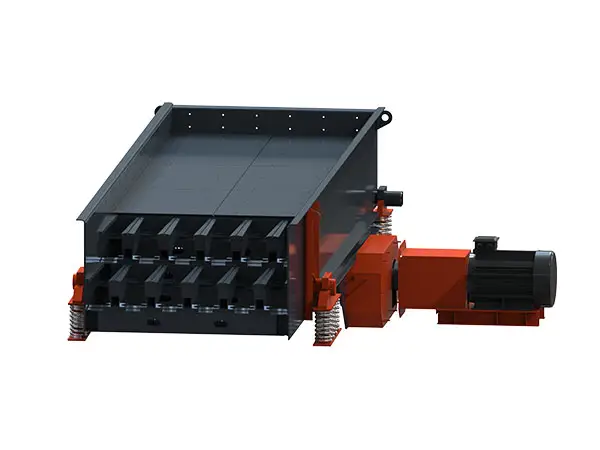
A vibrating grizzly feeder itself combines the basic feeding function of a vibrating feeder with a grizzly section for material separation.
The appropriate configuration depends on the characteristics of the raw material and the required process flow.
For a simple material feeding application, a standard vibrating feeder may be sufficient. For a primary crushing application involving large rocks and significant fines, a vibrating grizzly feeder can provide additional functionality.
Vibrating Feeder vs Grizzly Feeder: Which One Fits Your Plant?
There is no universal feeder that fits every mining or aggregate application. The better approach is to match the equipment to the actual operating conditions.
A vibrating feeder is generally appropriate when the plant needs reliable and controlled material feeding without significant pre-screening requirements.
A grizzly feeder is generally more suitable when the plant needs to handle large feed material and remove a portion of fines before primary crushing.
The following questions can help narrow down the selection:
What is the maximum feed size?
What is the required hourly capacity?
How much fine material is present?
Does the raw material contain clay or sticky material?
What is the moisture level?
Which type of crusher will receive the material?
Does the plant need pre-screening?
What is the available installation space?
How frequently will the feeder operate?
What are the expected maintenance and operating conditions?
By answering these questions before equipment selection, plant operators can develop a feeding solution that matches the actual production requirements.
Conclusion
Vibrating feeders and grizzly feeders both play important roles in mining, quarrying, aggregate production, and bulk material handling, but their functions are not identical.
A vibrating feeder primarily provides controlled and continuous material feeding, making it suitable for applications where stable material flow is the main requirement.
A grizzly feeder combines feeding with preliminary screening, making it particularly useful for large rocks containing fines and for primary crushing applications.
For mining and aggregate producers, the right choice should be based on the feed material, particle-size distribution, fines content, moisture, required capacity, crusher configuration, and overall plant layout.
If you are designing a new crushing plant or upgrading an existing material handling system, selecting the feeder according to the actual operating conditions can help create a more stable and efficient production process.
Looking for a vibrating feeder or vibrating grizzly feeder for your mining or aggregate project? Contact our technical team with your feed size, capacity, material type, and application requirements, and we can help you evaluate a suitable feeding solution.