How Does the 1,200 mm Rotor Impact Crusher Handle 500 t/h?
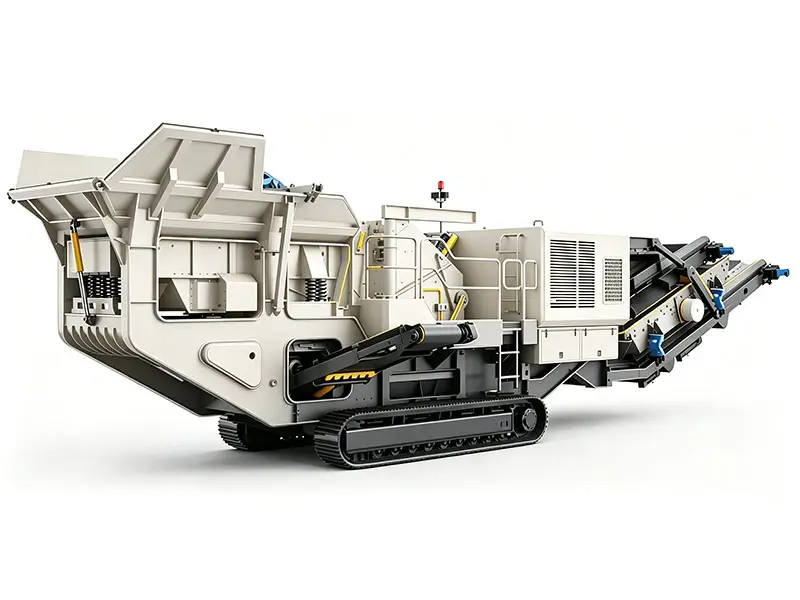
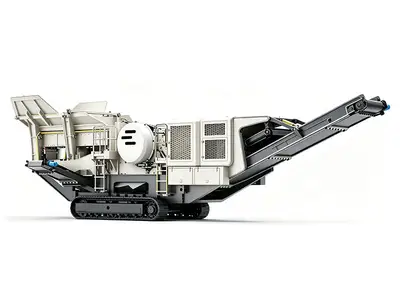
The tracked mobile impact crusher is defined by its 1,200 mm rotor and 450 kW engine, which together produce a throughput of up to 500 t/h. The crusher accepts feed material up to 800 mm, reducing it to a typical product size of 0–80 mm (adjustable via hydraulic gap setting). The unit weighs 52,000 kg and is mounted on a tracked undercarriage with a travel speed of 1.2 km/h, allowing it to move between stockpiles or quarry faces without a low-loader. The vibrating feeder with a 5 m³ hopper includes a pre-screen that removes fines before they enter the crusher, boosting net throughput by 15–20% in recycling applications. This specification is engineered for continuous duty in abrasive environments, with wear-resistant blow bars and liners rated for 600–800 hours between changes in hard rock.
Typical applications include primary and secondary crushing in limestone and demolition waste recycling, where the 800 mm feed opening handles large concrete lumps and asphalt slabs. In urban demolition, the tracked chassis and compact transport dimensions (15.5 m × 3.2 m × 3.8 m) allow access to confined sites, while the 450 kW engine provides enough power to maintain 500 t/h even when crushing reinforced concrete with rebar. The impact crusher's reduction ratio of up to 10:1 means fewer passes and lower operating costs compared to jaw crushers in recycling. For quarry operators, the 1,200 mm rotor delivers a cubical product shape with minimal oversize, reducing recirculation loads and screening costs.
Compared to smaller models in the range (e.g., 1,000 mm rotor, 350 t/h), this 1,200 mm version offers 43% higher throughput and a 20% larger feed opening, making it suitable for medium-to-large quarries and high-volume recycling yards. The 450 kW engine provides a 28% power reserve over the 350 kW unit, ensuring stable operation under peak loads. The track system features a 500 mm shoe width and a 3.2 m track gauge, giving a ground pressure of 0.85 kg/cm², which allows operation on softer ground without mats. This model is the preferred choice for contractors processing 200,000–500,000 tonnes per year, where uptime and fuel efficiency directly impact project margins.
- Hydraulic gap adjustment allows product size changes from 20 mm to 80 mm in under 5 minutes, reducing downtime by 90% compared to shim-based systems.
- Pre-screen with 1,200 mm × 2,400 mm mesh bypasses up to 30% of feed as fines, increasing crusher throughput by 15–20% in recycling.
- Heavy-duty undercarriage with 500 mm track shoes and 0.85 kg/cm² ground pressure enables operation on uneven terrain and soft ground without site preparation.