How Does the 60x50x80mm Boom Bushing Perform in High-Load Excavator Joints?
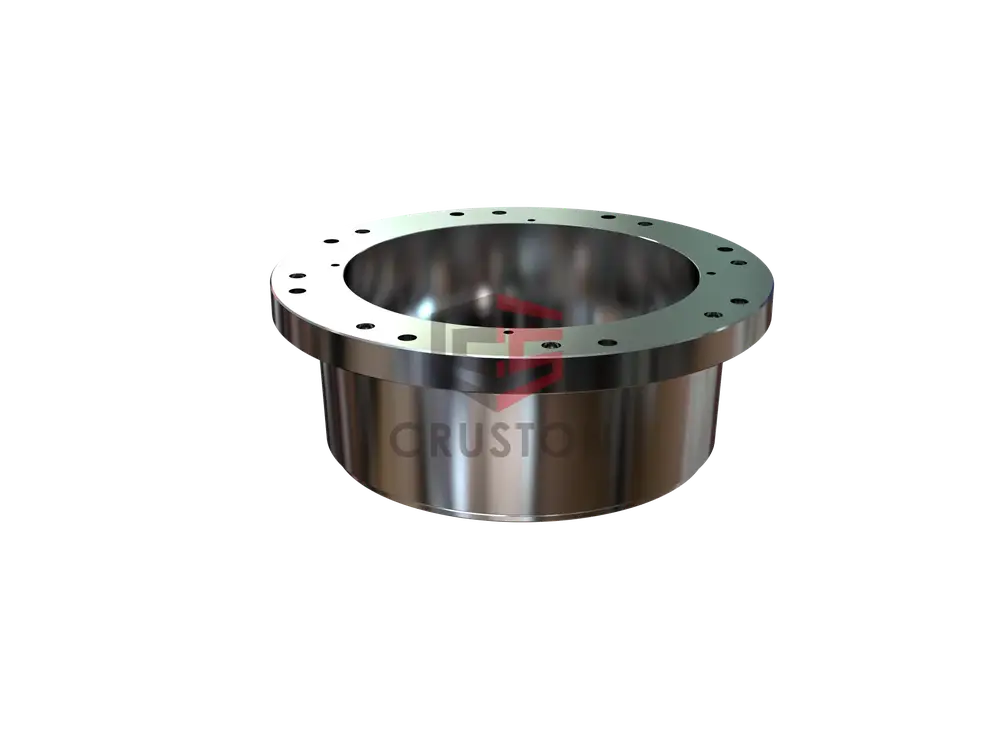
The Boom Bushing with 60mm OD, 50mm ID, and 80mm length is engineered for the pivot points of excavator booms and arms, where it must endure radial loads up to 150 kN and oscillating motion at low speeds. Manufactured from 20MnCr5 steel and through-hardened to 60-65 HRC, this bushing provides a hard, wear-resistant surface that protects the pin and bore from premature failure. The 80mm length offers a bearing area of 4000 mm², distributing load evenly and reducing contact pressure. Precision grinding ensures a ±0.02mm tolerance on both inner and outer diameters, allowing a close fit that minimizes impact loading and noise. For applications requiring better conformability and embeddability, a SAE 660 bronze version is available with a hardness of 70-90 HB, suitable for lower-speed, higher-load conditions.
Typical applications include the boom foot joint, arm cylinder rod end, and bucket linkage of 20-30 ton excavators. In these locations, the bushing must resist shock loads, contamination, and frequent greasing cycles. The hardened steel version excels in high-load, low-speed pivots where deformation resistance is critical, while the bronze version offers superior tolerance to edge loading and misalignment. This specific 60x50x80mm size is commonly found in excavators from major manufacturers such as Caterpillar, Komatsu, and Hitachi, making it a direct replacement for OEM part numbers. By maintaining proper clearance and surface hardness, the bushing reduces pin wear and extends the maintenance interval, lowering downtime and repair costs.
Compared to standard bushings in the same series, this 60x50x80mm variant offers a longer bearing length (80mm vs. 60mm) and a thicker wall (5mm vs. 4mm), increasing load capacity by approximately 30% without requiring a larger pin diameter. The additional length also improves stability under side loads, reducing edge stress that can lead to cracking. For high-impact applications, the steel version with 60-65 HRC hardness outperforms case-hardened bushings by providing deeper hardness penetration, resisting spalling and fatigue. The bronze version, on the other hand, provides better emergency running characteristics if lubrication fails. Both versions are available with optional lubrication grooves or holes to suit different maintenance regimes.
- Through-hardened 20MnCr5 steel achieves 60-65 HRC, providing a wear life up to 2.5 times longer than standard case-hardened bushings in abrasive conditions.
- Precision ground to ±0.02mm tolerance ensures proper interference fit and reduces pin clearance, minimizing impact noise and vibration.
- 80mm length increases bearing area by 33% compared to 60mm bushings, lowering contact pressure and extending service life under high loads.