How Does a 25mm Bore Drive Shaft Sleeve Solve Spline Wear in PTO Drivelines?
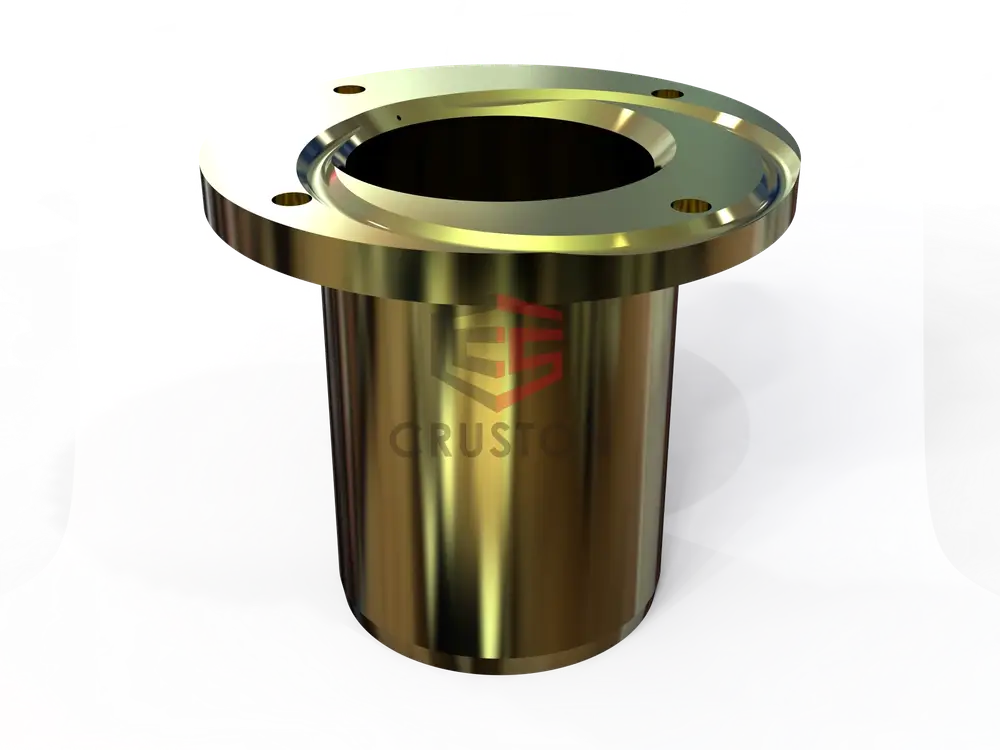
The 25 mm bore drive shaft sleeve is a repair-and-protection component for rotating shafts where the original mating surface has degraded. In agricultural power take-off (PTO) drivelines, the splined shaft end typically wears 0.1-0.3 mm after 1,500-2,000 hours of operation, causing backlash that accelerates universal joint failure. This sleeve, with its 25 mm precision bore and 32 mm outer diameter, is pressed or slid over the worn journal to restore the original 25 mm nominal interface. The AISI 1045 carbon steel substrate is induction hardened to 45-50 HRC with a case depth of 1.2-1.5 mm, providing a wear-resistant surface that withstands the 120-150 MPa contact pressures typical of spline couplings under 320 Nm torque. The 0.8 µm Ra bore finish is critical: it minimizes the initial running-in wear and ensures uniform load distribution across the sleeve length, preventing edge loading that causes premature spalling.
Typical application scenarios span three industries. In agriculture, the sleeve is specified for 540 and 1,000 rpm PTO shafts on tractors and implements, where dust and grit accelerate abrasive wear. In industrial material handling, it protects the output shafts of helical gearboxes driving belt conveyors, particularly in mining and aggregate operations where shock loads from material surges can exceed 1.5 times nominal torque. In marine systems, the sleeve is used on steering and propeller shaft assemblies to isolate the shaft from seawater corrosion when the original hard chrome layer has worn through. The 40 mm length is sized to cover the full spline engagement zone of a standard 25 mm shaft coupling, ensuring no exposed worn area remains. The sleeve's 45-50 HRC surface also resists fretting corrosion, a failure mode that accounts for 30-40% of premature driveline failures in high-vibration environments.
Compared with other repair options, this 25 mm bore sleeve offers a distinct advantage over welding and re-machining. Welding introduces heat distortion and requires post-weld heat treatment, adding 8-12 hours of downtime. The sleeve installs in under 30 minutes with a hydraulic press or, for slip-fit versions, by hand with a retaining compound. Compared with a full shaft replacement, the sleeve costs 15-20% of the new shaft price and avoids the need to disassemble the gearbox or differential. Compared with a generic 25 mm bushing, this sleeve's 1045 steel and 45-50 HRC hardness provide a 3-4 times longer wear life under the same contact pressure. The 0.8 µm Ra bore also distinguishes it from commercial bushings that typically specify 1.6-3.2 µm Ra, which generate higher friction and wear debris.
- Induction-hardened 45-50 HRC surface with 1.2-1.5 mm case depth for 120-150 MPa contact pressure resistance.
- 0.8 µm Ra bore finish reduces running-in wear and extends service interval to 2,500-3,000 hours in abrasive environments.
- 25 mm bore and 32 mm OD with ±0.02 mm tolerance enable press-fit or slip-fit installation without machining the shaft.
- 1045 carbon steel core at 28-32 HRC provides impact toughness to prevent brittle fracture under shock loads.