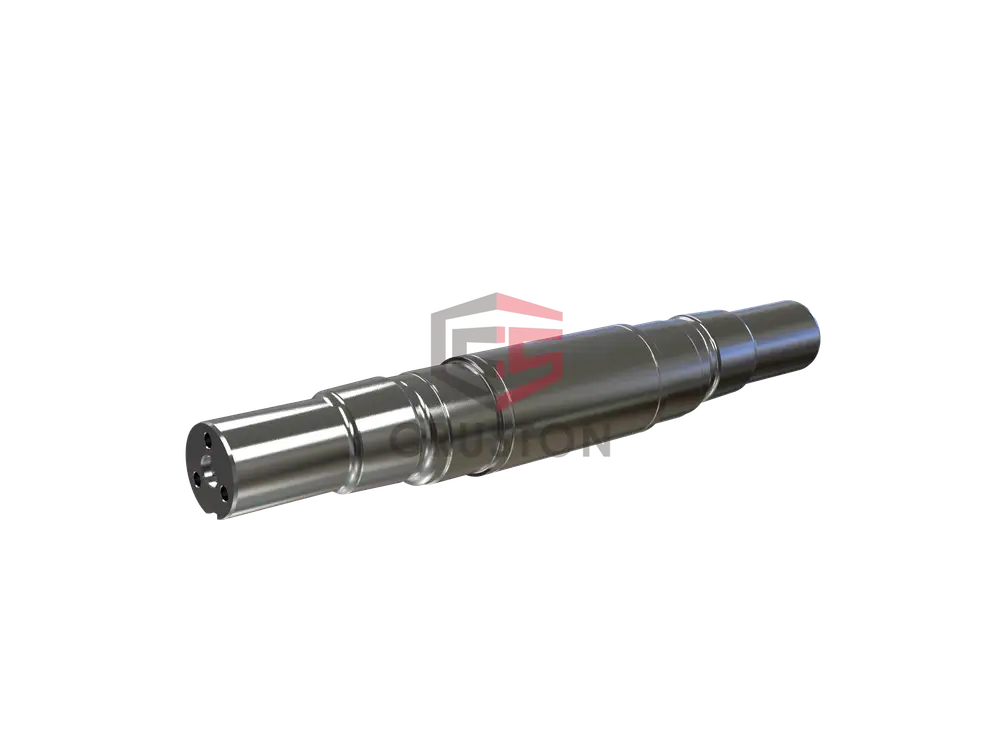
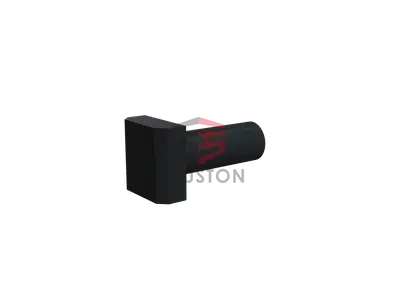
eccentric shaft

Eccentric Shaft

42CrMo4 Eccentric Shaft with 50mm Stroke for Heavy-Duty Machinery

This eccentric shaft converts rotary motion into precise linear reciprocation using a 50mm offset between the 20mm journal and 30mm eccentric diameter. Machined from 42CrMo4 alloy steel and induction hardened to HRC 50-55, it suits jaw crushers, mechanical presses, and vibratory screens where high radial loads and continuous cycling demand fatigue-resistant components.

Material
42CrMo4 alloy steel (AISI 4140)
Eccentricity (Stroke)
50mm
Surface Hardness
HRC 50-55 (induction hardened)
Tolerance
±0.01mm on journals

How Does the 50mm Stroke Eccentric Shaft Improve Crushing and Pressing Efficiency?

The eccentric shaft is a motion-conversion component that transforms uniform rotation into controlled reciprocating movement through an offset between its rotation axis and the eccentric journal. This specific unit features a 20mm journal diameter for main bearing support, a 30mm eccentric diameter for connecting rod or bearing mounting, and a 50mm eccentricity that produces a 100mm linear stroke per revolution. Manufactured from 42CrMo4 alloy steel (AISI 4140 equivalent) and induction hardened to HRC 50-55, the shaft maintains a tensile strength of 1,000-1,200 MPa and a yield strength above 850 MPa. Journal tolerances are held to ±0.01mm, and the eccentric profile is ground to 0.02mm TIR, ensuring proper bearing preload and minimizing vibration during operation.

In jaw crushers, this 50mm stroke eccentric shaft drives the movable jaw through a toggle plate arrangement, delivering a crushing force sufficient for reducing 300-500mm feed material to 50-100mm output at throughput rates of 50-200 t/h. For mechanical presses, the 50mm eccentricity provides a ram travel of 100mm, suitable for stamping, coining, and cold forging operations requiring high force density in a compact frame. Vibratory screen applications benefit from the 50mm stroke to generate 4-6mm amplitude at 800-1,200 RPM, effectively stratifying aggregates from 5mm to 50mm. The hardened surface resists wear from continuous contact with bearing inner rings, while the tough core absorbs shock loads typical in crushing circuits.

Compared to smaller eccentric shafts with 20-30mm strokes, this 50mm stroke model delivers higher per-cycle work output, reducing the number of cycles required for a given size reduction ratio. Against larger 80-100mm stroke shafts, it offers a more compact footprint and lower inertial forces, making it suitable for mobile crushing plants and medium-duty presses where frame size and weight are constrained. The 20mm journal diameter is compatible with standard 6204 or 7204 series bearings, simplifying maintenance and reducing replacement part lead times. The 30mm eccentric diameter accepts connecting rod bearings with a 30mm bore, a common size in small to medium machinery.

  • Induction-hardened to HRC 50-55 for wear resistance while retaining a tough, shock-resistant core
  • Precision-ground journals with ±0.01mm tolerance eliminate on-site machining and ensure proper bearing fit
  • Dynamically balanced to G6.3 grade at 1,500 RPM, reducing vibration and extending bearing life

Core Technical Features and Quantified Advantages

STEP 1

42CrMo4 Alloy Steel with Through-Hardened Core

The shaft is machined from 42CrMo4 (AISI 4140) alloy steel, which provides a tensile strength of 1,000-1,200 MPa and a yield strength of 850 MPa after quenching and tempering. This material composition allows the shaft to transmit torque up to 1,200 Nm without yielding, while the induction-hardened surface at HRC 50-55 resists abrasive wear from bearing contact. The core remains at HRC 28-32, providing the toughness needed to absorb shock loads in crusher and press applications.

STEP 2

50mm Eccentricity for 100mm Linear Stroke

The 50mm offset between the main journal axis and the eccentric journal axis produces a 100mm total linear stroke per revolution. This stroke length is optimized for jaw crushers with feed openings of 400-600mm and mechanical presses with 100-150 ton capacity. The eccentric profile is ground to 0.02mm TIR, ensuring consistent stroke length across the full rotation and minimizing side loading on the connecting rod bearing.

STEP 3

20mm Journal with ±0.01mm Tolerance

The 20mm journal diameter is ground to a tolerance of ±0.01mm and a surface finish of Ra 0.4μm, allowing direct mounting of 6204 or 7204 series bearings without additional machining. This tolerance class corresponds to ISO h6, providing a light interference fit for bearing inner rings that prevents creep under load while remaining serviceable with standard press tools. The journal hardness of HRC 50-55 exceeds the bearing inner ring hardness, preventing brinelling under high radial loads.

STEP 4

Dynamic Balance Grade G6.3 at 1,500 RPM

Each shaft is dynamically balanced to G6.3 grade per ISO 1940-1, with residual unbalance below 2.5 g·mm/kg at the maximum operating speed of 1,500 RPM. This balance quality reduces centrifugal forces on bearings by up to 40% compared to unbalanced shafts, extending bearing service life and lowering vibration levels in the surrounding frame. The balancing is achieved by removing material from the counterweight pads, which are cast integral with the shaft to avoid stress concentrations.

FAQs about Eccentric Shaft

Similar Models