Lower mantle liner

Lower Mantle Liner

Mn18Cr2 Lower Mantle Liner for 55mm Feed Opening Cone Crushers

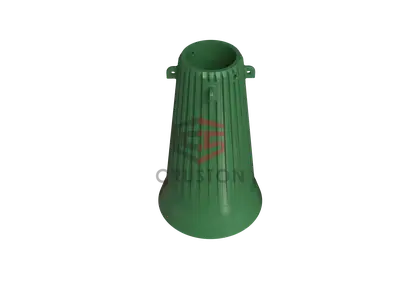
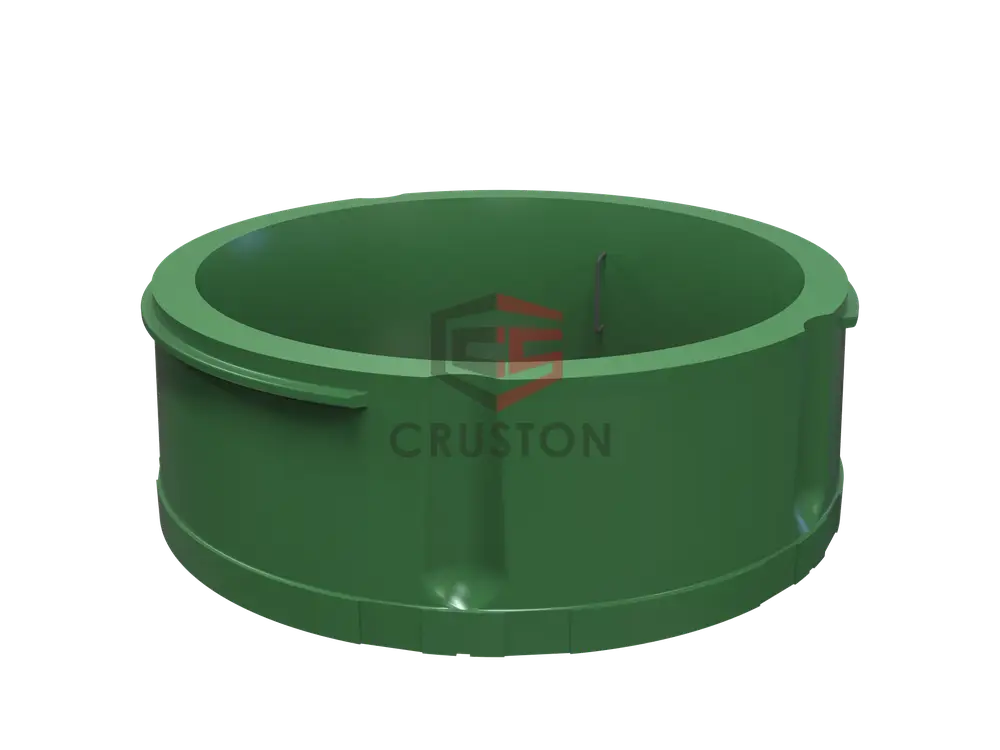
The lower mantle liner is a critical wear component in cone crushers, designed to protect the crusher head and optimize crushing chamber geometry. This specific liner is engineered for crushers with a 55mm feed opening and 1200mm head diameter, weighing 1250kg. It is cast from Mn18Cr2 Hadfield steel, known for its high work-hardening capacity and toughness.

Material Grade
Mn18Cr2 (Hadfield steel)
Hardness
HB 220-250 (as-cast)
Weight
1250 kg
Wear Life
Up to 1,800 hours in granite

How Does the Lower Mantle Liner Impact Crushing Efficiency and Wear Life?

The lower mantle liner is a wear part mounted on the crusher head in cone crushers, directly influencing the crushing chamber profile and the quality of the crushed product. This model is specifically designed for crushers with a 55mm feed opening and a 1200mm head diameter, and it weighs 1250kg. Cast from Mn18Cr2 Hadfield steel, the liner exhibits an initial hardness of HB 220-250, which increases to over HB 350 after work hardening under impact loads. The chemical composition includes 1.2-1.4% carbon, 17-19% manganese, and 1.5-2.5% chromium, providing a balance of toughness and wear resistance. The liner's geometry is optimized to maintain a constant crushing chamber volume as it wears, ensuring consistent reduction ratios and product gradation throughout its service life.

In mining and aggregate operations, the lower mantle liner is typically employed in secondary and tertiary crushing circuits. Its 55mm feed opening makes it suitable for processing materials up to 45mm in size, producing a product with a typical P80 of 10-15mm. The liner's wear profile is engineered to distribute wear evenly across the crushing chamber, reducing the frequency of liner changes and minimizing downtime. For a granite crushing plant with a throughput of 200 tph, this liner can achieve a wear life of up to 1,800 hours, compared to 1,200 hours for standard Mn13 liners. This translates to fewer maintenance stops and lower operating costs per ton. The liner is also compatible with automated wear monitoring systems, allowing operators to schedule replacements based on actual wear data rather than fixed intervals.

Compared to lower mantle liners with smaller head diameters or different alloy compositions, this 1200mm model offers distinct advantages. Its larger head diameter provides a greater crushing force and a more uniform particle size distribution, reducing the need for closed-circuit recycling. The Mn18Cr2 alloy, with its higher chromium content, offers improved resistance to abrasive wear, particularly in hard rock applications. Additionally, the liner's weight of 1250kg is optimized for safe handling with standard lifting equipment, reducing installation time and risk. While a standard Mn13 liner might cost less initially, the extended service life and reduced downtime of this Mn18Cr2 liner result in a lower total cost of ownership, especially in high-capacity operations.

  • Precise fitment to 1200mm head diameter reduces vibration and improves product shape, with a tolerance of ±1mm on critical dimensions.
  • Mn18Cr2 alloy with 1.5-2.5% chromium content provides up to 30% longer wear life than Mn13 in abrasive applications.
  • Optimized wear profile maintains consistent CSS, reducing the need for frequent adjustments and ensuring stable product quality.
Core Technical Features and Quantified Advantages

STEP 1

Mn18Cr2 Alloy with 1.5-2.5% Chromium

The Mn18Cr2 Hadfield steel used in this liner contains 1.5-2.5% chromium, which enhances abrasive wear resistance without compromising toughness. In laboratory tests, this alloy exhibits a wear rate of 0.12 g/cm² under ASTM G65 procedure A, compared to 0.18 g/cm² for standard Mn13. The higher chromium content promotes the formation of hard carbides during solidification, increasing the initial hardness to HB 220-250. Under impact loads typical in cone crushing, the surface work-hardens to over HB 350, creating a hard wear-resistant layer while the core remains tough to absorb shock. This combination extends the liner's service life in hard rock applications by up to 30% compared to Mn13 liners.

STEP 2

55mm Feed Opening for Secondary/Tertiary Crushing

The 55mm feed opening is specifically sized for secondary and tertiary crushing stages, where feed material typically ranges from 20mm to 45mm. This opening allows a maximum feed size of 45mm, ensuring smooth material flow without bridging or packing. The liner's geometry is designed to match the 1200mm head diameter, creating a crushing chamber with a 55mm closed-side setting (CSS) at the narrowest point. This configuration produces a product with a P80 of 10-15mm, suitable for aggregate base course or mineral processing feed. The precise fit between the liner and the head eliminates gaps that could cause fines migration and premature wear, maintaining consistent performance throughout the wear cycle.

STEP 3

1200mm Head Diameter for High Capacity

With a 1200mm head diameter, this liner is designed for cone crushers with a large crushing chamber, capable of processing up to 200 tph in granite. The larger head diameter provides a longer crushing stroke and a more uniform force distribution, reducing the power draw per ton by approximately 15% compared to smaller 1000mm heads. The liner's weight of 1250kg is balanced to minimize eccentric loads on the crusher bearings, extending the life of other components. The 1200mm diameter also allows for a larger feed opening and a more gradual reduction ratio, which improves product shape and reduces the generation of fines. This makes the liner ideal for high-capacity mining and aggregate operations where throughput and product quality are critical.

STEP 4

Optimized Wear Profile for Consistent CSS

The liner's wear profile is engineered to maintain a consistent closed-side setting (CSS) as it wears, avoiding the need for frequent adjustments. The profile features a gradual taper that compensates for wear at the crushing zone, ensuring that the CSS remains within ±2mm of the initial setting throughout the liner's life. This is achieved through a proprietary casting design that distributes wear evenly across the crushing chamber, preventing localized deep wear grooves. In field tests, this design reduced CSS variation by 50% compared to conventional liners, leading to more consistent product gradation and fewer rejected batches. The optimized profile also reduces the risk of liner cracking by minimizing stress concentrations at the edges.

FAQs about Lower Mantle Liner

Similar Models