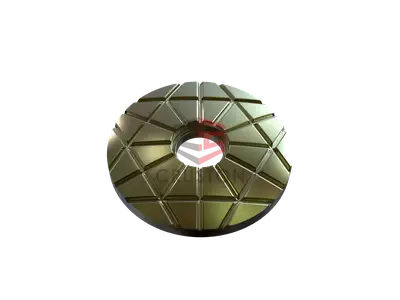
How Does the 120mm Spherical Bearing Pad Handle 1000kN Loads and Seismic Movements?
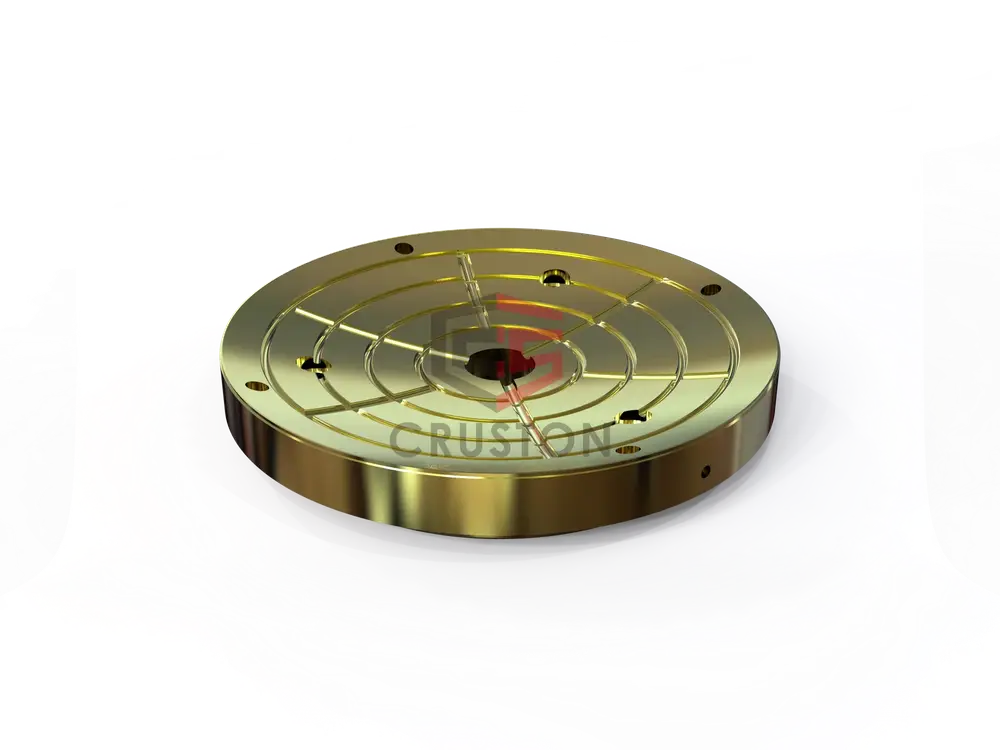
The 120mm spherical bearing pad is a precision-engineered device designed to transfer vertical loads while accommodating rotational movements in structures. With a diameter of 120mm and a height of 50mm, it supports a vertical load capacity of 1000kN, making it suitable for medium-span bridges and industrial buildings. The pad consists of a convex spherical plate, a concave mating plate, and a PTFE sliding layer, which allows rotation up to ±5° and horizontal displacement. This design effectively absorbs seismic energy and accommodates thermal expansion, reducing stress on structural elements. The use of high-grade steel ensures resistance to fatigue and corrosion, while the PTFE layer provides a low coefficient of friction (typically 0.02 to 0.05), minimizing wear and extending service life.
In seismic-prone regions, the 120mm spherical bearing pad addresses the critical challenge of isolating structures from ground motion. During an earthquake, the pad's rotational capability allows the structure to move independently, dissipating energy and preventing damage to columns and beams. For bridge applications, it accommodates the longitudinal and transverse movements caused by temperature fluctuations and traffic loads. The 1000kN load capacity is ideal for medium-span bridges (up to 30m) and multi-story buildings, where it ensures stability and safety. Additionally, the pad's compact size (120mm diameter) makes it suitable for retrofit projects with limited space, offering a cost-effective solution without compromising performance.
Compared to smaller or larger spherical bearing pads, the 120mm model strikes a balance between load capacity and space efficiency. While 80mm pads handle up to 500kN and are suited for pedestrian bridges, and 200mm pads support 2000kN for heavy-duty applications, the 120mm pad fills the gap for medium-load structures. Its ±5° rotation is greater than standard fixed bearings (which offer no rotation) but less than high-rotation pads (±10°) used in long-span bridges. This makes it a versatile choice for projects requiring moderate articulation. The pad is also compatible with common installation methods, including bolted connections and grouted joints, ensuring easy integration into existing designs.
- Load capacity of 1000kN verified by finite element analysis and static load testing, with a safety factor of 2.0 against yield.
- Rotation angle of ±5° tested under cyclic loading (10,000 cycles) without degradation, meeting EN 1337-7 standards.
- PTFE sliding layer with a friction coefficient of 0.03, reducing horizontal forces by up to 70% compared to steel-on-steel contacts.