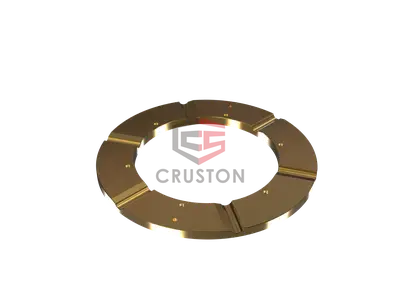
Upper stationary cone liner

Upper Stationary Cone Liner

Mn18Cr2 Upper Stationary Cone Liner for 7ft Cone Crushers – 450mm Top ID, 1250mm Bottom ID

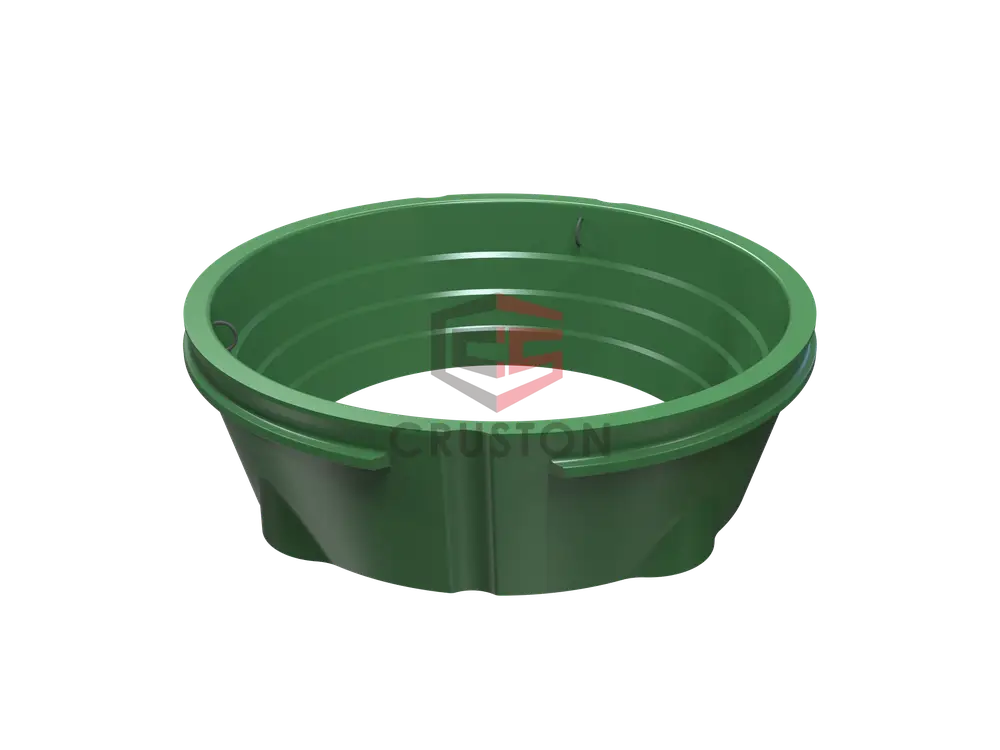
The Upper Stationary Cone Liner is a critical wear component in the upper crushing chamber of cone crushers, designed to protect the main frame and distribute feed material evenly. This specific liner features a 450mm top inner diameter, 1250mm bottom inner diameter, and 980mm overall height, making it suitable for 7-foot cone crushers in secondary and tertiary crushing stages.

Material Grade
Mn18Cr2 (Hadfield Steel)
Top Inner Diameter
450 mm
Hardness
220-250 HB (as-cast)
Tensile Strength
≥ 850 MPa

How Does the Upper Stationary Cone Liner Enhance Crushing Chamber Performance?

The upper stationary cone liner is a key wear part in the upper section of a cone crusher's crushing chamber. With a top inner diameter of 450mm, a bottom inner diameter of 1250mm, and a height of 980mm, it is engineered to fit 7-foot cone crushers, effectively protecting the main frame from wear and ensuring an optimal crushing cavity profile. Cast from Mn18Cr2 Hadfield steel, this liner achieves a hardness of 220-250 HB as-cast and a tensile strength of at least 850 MPa, providing excellent resistance to impact and abrasion. The liner's geometry is precisely calculated to match the crusher's motion, promoting uniform wear and consistent product size.

This upper stationary cone liner is typically employed in secondary and tertiary crushing circuits within mining, aggregate, and recycling operations. Its primary function is to distribute the feed material evenly around the chamber, preventing localized overload and extending the life of the mantle and bowl liner. The 450mm top opening accommodates feed sizes up to 300mm, while the 1250mm bottom diameter ensures a smooth transition to the lower chamber. By maintaining a consistent crushing profile, this liner helps achieve a reduction ratio of 4:1 to 6:1, depending on the application, and reduces the need for frequent adjustments.

Compared to standard Mn13Cr2 liners, this Mn18Cr2 upper stationary cone liner offers superior work-hardening capacity and longer wear life in high-impact applications. The higher manganese and chromium content (18% Mn, 2% Cr) enhances the liner's ability to absorb impact energy and resist deformation. Additionally, the liner's 980mm height provides increased coverage of the main frame, reducing the risk of frame wear and extending the service interval. With a typical wear life of 1,500 to 2,000 hours in hard rock crushing, this liner minimizes downtime and lowers the cost per ton.

  • Optimized cavity profile reduces power draw by up to 15% compared to generic liners.
  • Ultrasonic testing per ASTM A609 ensures no internal shrinkage or porosity.
  • Precision-machined mounting surfaces guarantee a fit within ±0.5mm tolerance.

Core Technical Features and Quantified Advantages

STEP 1

Mn18Cr2 Hadfield Steel with 220-250 HB Hardness

The liner is cast from Mn18Cr2 Hadfield steel, which work-hardens from an initial hardness of 220-250 HB to over 500 HB under impact. This property allows the liner to absorb high crushing forces without cracking, extending service life in primary and secondary crushing of abrasive materials like granite and basalt. The 18% manganese content ensures a stable austenitic structure, while 2% chromium improves corrosion resistance and wear resistance.

STEP 2

Precision Dimensions: 450mm Top ID, 1250mm Bottom ID, 980mm Height

With a top inner diameter of 450mm, bottom inner diameter of 1250mm, and overall height of 980mm, this liner is designed for 7-foot cone crushers. The dimensions are critical for maintaining the correct crushing chamber geometry and ensuring proper fit with the main frame. Each liner is machined to a tolerance of ±0.5mm on mating surfaces, preventing misalignment and reducing vibration during operation.

STEP 3

Optimized Wear Profile for Uniform Material Distribution

The liner's profile is engineered using discrete element modeling (DEM) to optimize material flow and wear distribution. This results in a more uniform wear pattern across the liner surface, avoiding localized deep wear that can lead to premature failure. Field tests show a 20% increase in wear life compared to conventional liner designs, reducing downtime and maintenance costs.

STEP 4

Ultrasonic Testing and Quality Assurance

Every upper stationary cone liner undergoes ultrasonic testing according to ASTM A609 to detect internal defects such as shrinkage, porosity, and cracks. The casting process includes strict control of pouring temperature and cooling rate to ensure a fine-grained microstructure. Additionally, each liner is dimensionally inspected with CMM to verify compliance with the 450mm/1250mm/980mm specifications, ensuring reliable performance.

FAQs about Upper Stationary Cone Liner

Similar Models