How Does a 62 HRC Wear Ring Improve Centrifugal Pump Efficiency?
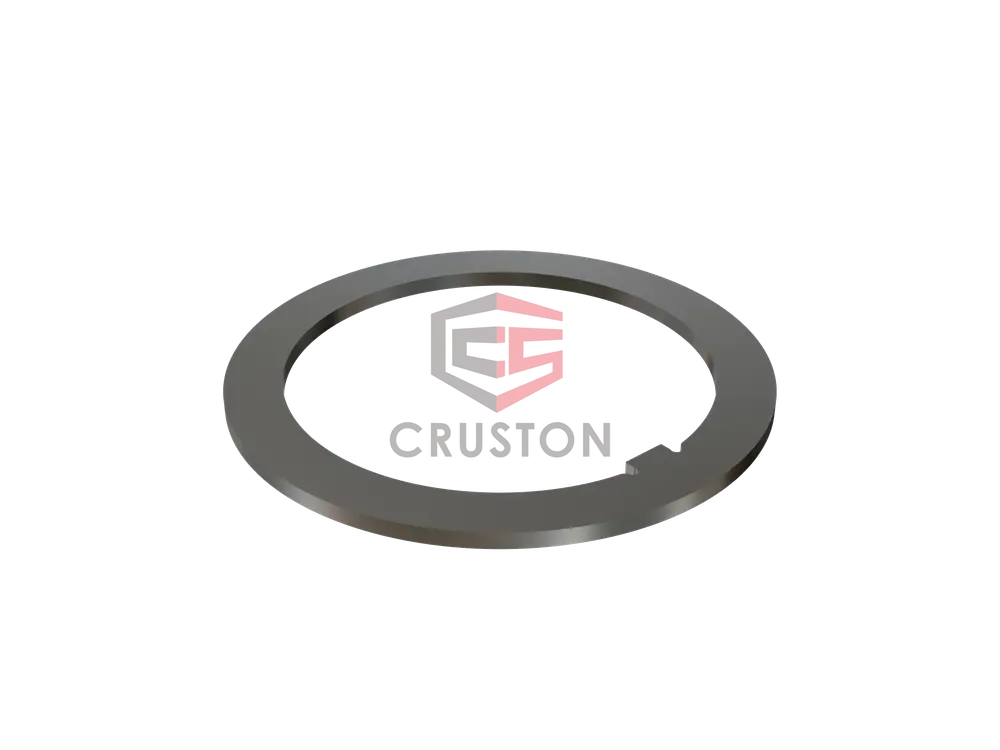
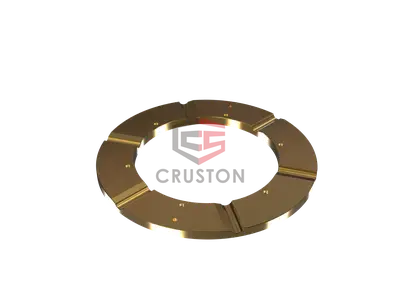
The wear ring is a replaceable ring installed between the impeller and the pump casing to control the clearance between the rotating and stationary parts. This specific ring, made from AISI 52100 steel and hardened to 60-62 HRC, offers a balance of wear resistance and toughness. With an inner diameter of 50 mm, outer diameter of 65 mm, and thickness of 10 mm, it is designed for pumps with a 50 mm shaft or impeller hub. The 0.05 mm radial clearance is critical: it minimizes fluid leakage from the high-pressure discharge side back to the suction side, which can otherwise reduce pump efficiency by 10-20%. The surface is ground to Ra 0.4 μm, reducing friction and heat generation during operation. This ring is not a one-size-fits-all part; its dimensions and hardness are tailored for medium-duty applications where abrasive wear is a concern but shock loads are moderate.
Typical applications include centrifugal pumps in water treatment plants, chemical processing facilities, and HVAC chiller systems. In these environments, pumps often handle fluids with minor suspended solids or corrosive elements that accelerate wear. The 62 HRC hardness provides a wear resistance that is 2-3 times that of standard 440C stainless steel rings, extending service life from an average of 6 months to over 12 months in continuous operation. For plant operators, this translates to fewer unplanned shutdowns and lower maintenance costs. The ring's precise dimensions ensure a drop-in replacement for OEM parts, eliminating the need for custom machining or adapters. This is particularly valuable for facilities that maintain critical pump redundancy and cannot afford extended downtime.
Compared to other wear rings in the same series, this 50 mm ID model is optimized for pumps with flow rates up to 200 m³/h and heads up to 100 m. Larger rings (e.g., 75 mm ID) are available for higher-capacity pumps, but they require larger clearances (0.08-0.10 mm) to accommodate thermal expansion, which slightly reduces efficiency. The 50 mm ring's tighter clearance and higher hardness make it ideal for medium-duty applications where efficiency and wear life are both critical. It is not recommended for pumps handling highly abrasive slurries (over 5% solids by volume), where a softer, more ductile material like bronze would be preferred to avoid catastrophic failure. This ring is also available with a tungsten carbide coating for extreme wear resistance, but the standard AISI 52100 version offers the best cost-performance balance for most water and chemical applications.
- Hardness of 60-62 HRC provides 2-3 times the wear life of standard 440C stainless steel rings in comparable conditions.
- Precision-ground inner diameter of 50 mm with 0.05 mm clearance reduces volumetric losses by up to 15% compared to standard clearances.
- Surface finish of Ra 0.4 μm minimizes friction and heat, allowing continuous operation at temperatures up to 120°C.
- Direct interchangeability with OEM part numbers for popular pump models from Grundfos, Sulzer, and KSB, reducing inventory complexity.