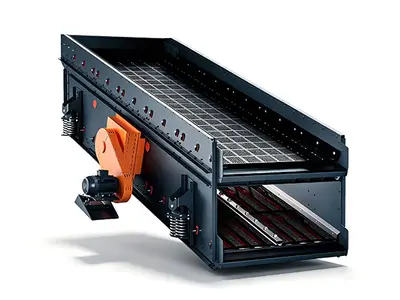
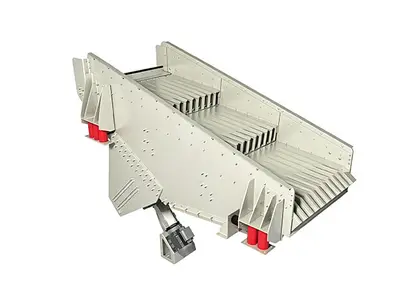
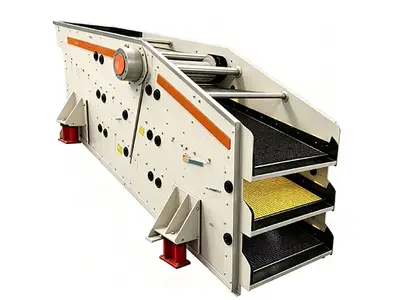
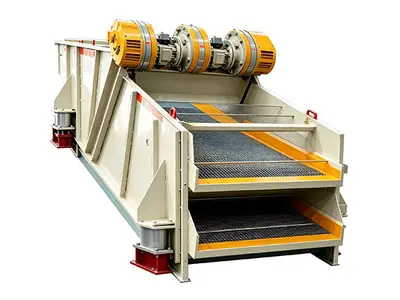
CES Series Horizontal Vibrating Screen

CES Series Horizontal Vibrating Screen

CES Series: Elliptical Motion Horizontal Vibrating Screen for High Moisture and Sticky Materials

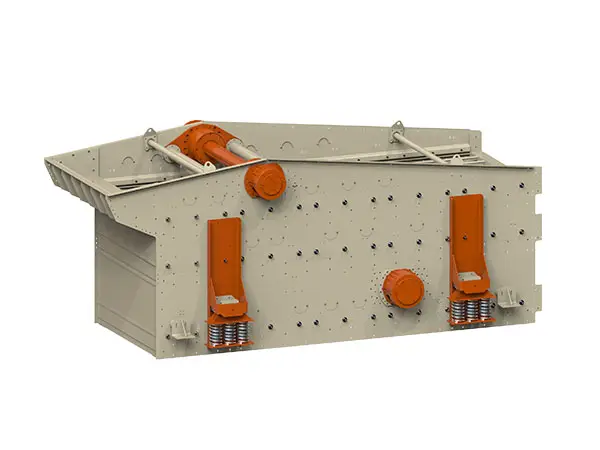
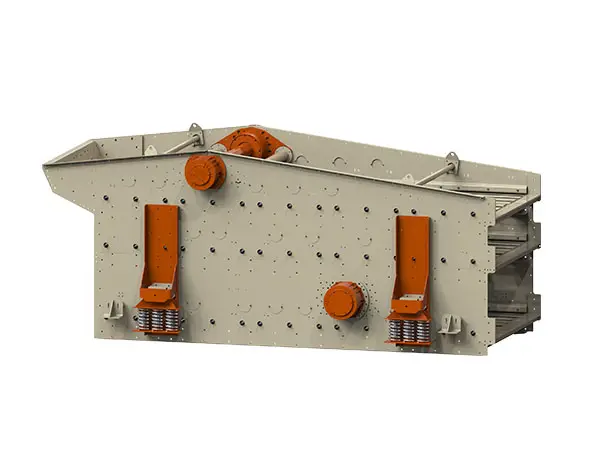
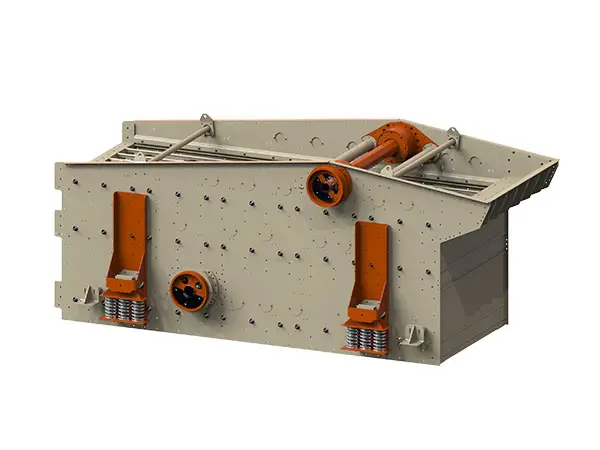
The Cruston CES series horizontal vibrating screen is engineered to deliver superior screening efficiency in the most challenging industrial environments. Unlike conventional linear motion screens, the CES Series utilizes counter-rotating, unbalanced dual shafts to generate a highly efficient elliptical motion.

Model
CES 202
Sieve Plate Dimensions
1,870 x 4,880 mm
Screening Area
9.1 m²
Number of Sieve Layers
2

How Does the CES Series Horizontal Vibrating Screen Handle Wet and Sticky Materials?

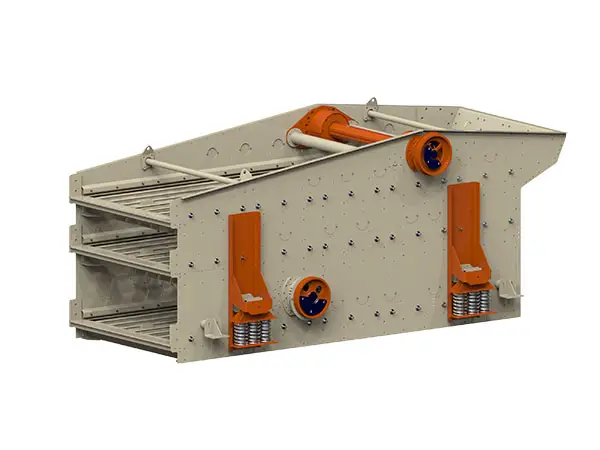
The Cruston CES series horizontal vibrating screen is a high-performance screening solution that employs a pair of counter-rotating, unbalanced dual shafts to produce a highly efficient elliptical motion. This motion is more effective than the linear motion of conventional horizontal screens and more reliable than other elliptical vibrating screens. The CES Series is available in eight models, with screening areas from 9.1 m² to 17.8 m² and sieve plate dimensions ranging from 1,870 x 4,880 mm to 2,480 x 7,300 mm. The number of sieve layers can be 2 or 3, and the MV exciter configurations vary from 2×MV2/2×MV3 to 2xMV3/4xMV3. Weights range from 9,500 kg to 22,500 kg. This series is designed to provide continuous and accurate sorting even under conditions of high moisture content and viscous feed, making it suitable for challenging applications such as wet screening or screening of sticky and impurity materials.

The CES Series excels in industries where material stickiness and moisture content often cause blinding and reduced efficiency. From ore to gravel, the screen handles all types of materials with reliable performance and precise screening. The elliptical motion generated by the dual shafts creates a vigorous action that helps to dislodge near-size particles and prevents clogging, ensuring uninterrupted operation. This is particularly beneficial in mining, quarrying, and aggregate processing, where wet or sticky feed can quickly render traditional screens ineffective. The CES Series offers a 25% higher output compared to conventional screens of the same specifications, directly translating to increased productivity and lower cost per ton. Additionally, the absence of mechanical timing devices, gear mechanisms, and lubricating oil leaks minimizes downtime and simplifies maintenance, further enhancing operational efficiency.

Within the CES Series, each model is optimized for different capacity and space requirements. For instance, the CES 202 and CES 203 share the same 1,870 x 4,880 mm sieve plate and 9.1 m² screening area, but the CES 203 has three sieve layers instead of two, allowing for more precise size separation. The CES 302 and CES 303 offer a larger 11.4 m² area with 1,870 x 6,100 mm plates, while the CES 402 and CES 403 step up to 2,480 x 6,100 mm and 15.1 m². The largest models, CES 502 and CES 503, feature 2,480 x 7,300 mm plates and a 17.8 m² screening area, with the CES 503 available with either 2xMV3 or 4xMV3 exciters. Compared to other elliptical vibrating screens, the CES Series has a 50% larger interlayer spacing, which facilitates easier maintenance and reduces the risk of material buildup between layers. This design consideration, combined with the simple structure and low failure rate, makes the CES Series a reliable and cost-effective choice for demanding screening applications.

  • Excitation force up to 6G ensures aggressive screening action and high efficiency.
  • Adjustable tilt angle from 0 to 5 degrees allows fine-tuning for optimal material flow and screening performance.
  • MV™ vibrator technology provides reliable, long-lasting operation with minimal maintenance.

Technical Specifications

Serial NumberModelSieve plate Dimensions (mm)Screening Area (m²)Number of Sieve LayersMV ExciterWeight (kg)
1CES 2021,870 x 4,8809.122×MV2/2×MV39,500
2CES 2031,870 x 4,8809.132×MV2/2×MV310,500
3CES3021,870 x 6,10011.422×MV2/2×MV39,500
4CES3031,870 x 6,10011.432×MV2/2×MV311,500
5CES4022,480 x 6,10015.122xMV3/2xMV412,360
6CES4032,480 x 6,10015.132xMV3/2xMV416,500
7CES5022,480 x 7,30017.822xMV3/2xMV415,500
8CES5032,480 x 7,30017.832xMV3 / 4xMV3​22,500

Core Technical Features and Quantified Advantages

STEP 1

High Excitation Force up to 6G

The CES Series generates an excitation force of up to 6G, which is significantly higher than many conventional screens. This high force is achieved through the counter-rotating, unbalanced dual shafts that produce an elliptical motion. The 6G force ensures that even the most difficult materials, such as wet and sticky ores, are effectively separated. This results in higher screening efficiency and reduced blinding, allowing for continuous operation without frequent stoppages for cleaning. The robust design of the MV exciter supports this high force while maintaining reliability and low maintenance requirements.

STEP 2

25% Higher Output than Conventional Screens

Compared to conventional screens of the same specifications, the CES Series delivers 25% higher output. This is primarily due to the efficient elliptical motion that promotes faster material stratification and passage of undersize particles. The increased output means that for the same footprint, a CES screen can process more material per hour, reducing the number of units required and lowering capital expenditure. This advantage is particularly valuable in high-throughput operations where maximizing productivity is critical. The 25% figure is based on comparative tests under typical operating conditions.

STEP 3

Adjustable Tilt Angle 0-5°

The CES Series features an adjustable tilt angle ranging from 0 to 5 degrees. This allows operators to fine-tune the screen's inclination to match specific material characteristics and desired separation efficiency. A steeper angle increases material travel speed, which can be beneficial for highly viscous materials, while a shallower angle increases retention time for better screening of fine particles. This adjustability ensures optimal performance across a wide range of applications and feed conditions, enhancing the versatility of the screen.

STEP 4

50% Larger Interlayer Spacing

Compared to other elliptical vibrating screens, the CES Series has a 50% larger interlayer spacing. This design feature provides more room between sieve layers, which facilitates easier inspection and maintenance. It also reduces the risk of material accumulation and bridging between layers, a common issue in multi-layer screens handling sticky materials. The larger spacing contributes to the screen's ability to handle high moisture content and viscous feed without clogging, ensuring consistent performance and extended service intervals.

FAQs about this product

Similar Models