Flip-flow screen

Flip-Flow Screen

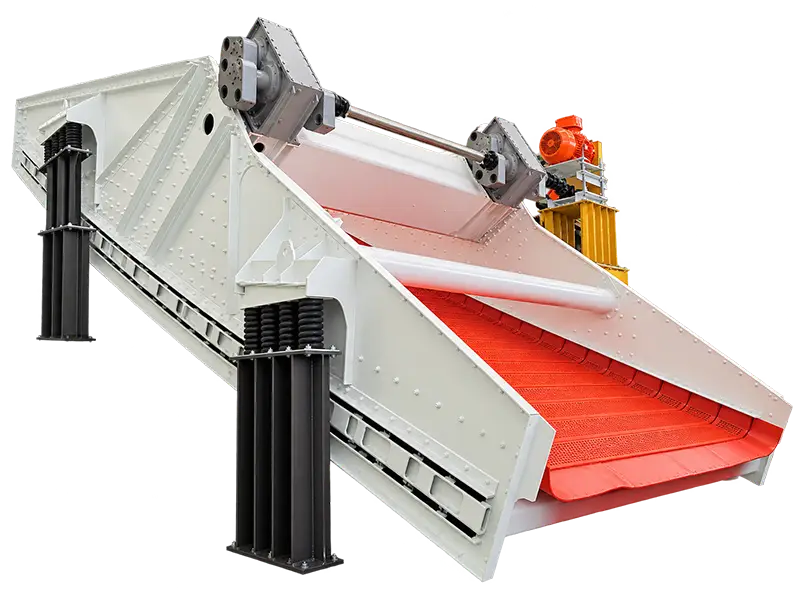
Flip-flow screen with 50G vibration intensity for sticky and damp materials

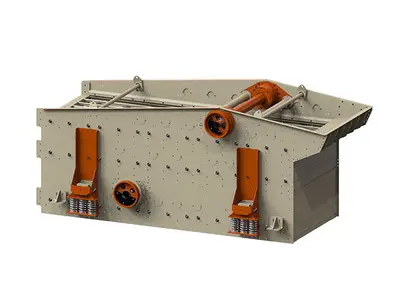
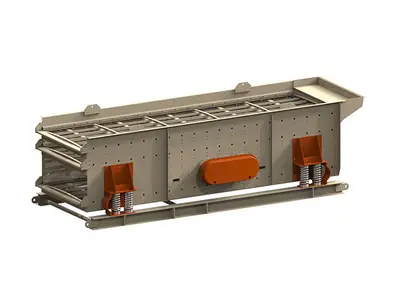
The flip-flow screen is a high-efficiency screening machine that utilizes the high-frequency, flexible motion of an elastic screening surface. Its core mechanism is a dual-mass sub-resonant system that generates vibration intensities up to 50G, effectively loosening and passing material to prevent agglomeration.

Vibration Intensity
Up to 50G
Screen Surface Type
Elastic polyurethane screen mats
System Type
Dual-mass sub-resonant system
Components
Box-type exciter, main vibrating screen frame, floating screen frame, shear springs, main suspension/support springs, drive system

How Does the Flip-flow Screen Handle Sticky and Damp Materials?

The flip-flow screen is a specialized screening apparatus that employs a high-frequency, flexible motion of an elastic screening surface to achieve high-efficiency separation. At its core, the machine operates on a dual-mass sub-resonant system, where the screening surface attains vibration intensities of up to 50G. This intense acceleration is generated by a box-type exciter and transmitted through a main vibrating screen frame and a floating screen frame, with shear springs providing the necessary flexibility. The elastic polyurethane screen mats are the key contact elements, and their rapid flipping action prevents material from adhering to the surface. The main suspension/support springs isolate vibrations, while the drive system ensures consistent operation. This combination allows the flip-flow screen to process materials that are notoriously difficult to screen, such as those with high moisture or viscosity, without clogging or blinding.

Typical applications for the flip-flow screen span industries dealing with challenging bulk materials. In mining and mineral processing, it efficiently screens ores with high clay content or moisture, reducing the need for prior drying. In the recycling sector, it separates compost, construction waste, and municipal solid waste where stickiness and agglomeration are common. The construction industry benefits from screening sand, gravel, and recycled aggregates that may contain damp fines. The chemical and fertilizer industries use it to handle hygroscopic or sticky powders and granules. By preventing agglomeration and ensuring continuous material flow, the flip-flow screen addresses the pain points of conventional screens that suffer from frequent downtime and reduced capacity when facing difficult materials. Its high throughput per unit area translates to lower operating costs and higher productivity.

Compared to other models in the flip-flow screen series, this configuration stands out through its specific combination of a box-type exciter and elastic polyurethane screen mats, which together deliver a vibration intensity of up to 50G. While some flip-flow screens may offer different drive systems or screen materials, this variant is optimized for medium-to-fine particle sizes with high viscosity or moisture content. The dual-mass sub-resonant design ensures energy-efficient operation by amplifying vibrations near resonance, reducing power consumption. The use of shear springs and main suspension/support springs provides robust isolation, extending the lifespan of the frame and reducing maintenance. This model's ability to handle high throughput per unit area without compromising screening efficiency makes it a preferred choice for operations where space is limited but capacity demands are high. The elastic polyurethane screen mats are resistant to wear and tear, further enhancing durability and reducing replacement costs.

  • Dual-mass sub-resonant system achieves up to 50G vibration intensity for effective loosening of sticky materials.
  • Elastic polyurethane screen mats resist blinding and agglomeration, ensuring continuous screening of damp and viscous materials.
  • High throughput per unit area and superior screening efficiency reduce operating costs and maximize productivity.

Technical Specifications

Single-Deck Flip-Flow ScreenDouble-Layer Single-Tension ScreenDouble-Deck Flip-Flow Screen
ModelScreen Surface Dimensions (m)Reference Weight (kg)ModelScreen Surface Dimensions (m)Reference Weight (kg)ModelScreen Surface Dimensions (m)Reference Weight (kg)
HSCX24482.4×4.88600HDCXS24482.4×4.812500HDCXD24902.4×9.019800
HSCX30733.0×7.313500HDCXS24612.4×6.113500HDCXD301003.0×1028000
HSCX30803.0×8.014000HDCXS30903.0×9.025000
HSCX30903.0×9.015000HDCXS36733.6×7.323500HDCXD36803.6×8.024100
HSCX301003.0×1017900HDCXS36803.6×8.026500
HSCX36733.6×7.314250HDCXS36853.6×8.528000
HSCX36803.6×8.014500HDCXS36903.6×9.029000
HSCX36853.6×8.515000HDCXS361003.6×1030600
HSCX361003.6×1023000HDCXS431004.3×1037400
HSCX431004.3×1028000

Core Technical Features and Quantified Advantages

STEP 1

Dual-Mass Sub-Resonant System with 50G Vibration Intensity

The dual-mass sub-resonant system amplifies vibrations to achieve up to 50G intensity on the screening surface. This high acceleration effectively breaks down agglomerates and prevents material from adhering to the screen mats. The system operates near resonance, reducing energy consumption while maintaining high screening efficiency. Components such as shear springs and main suspension/support springs are precisely tuned to ensure stable operation and minimal transmission of vibrations to the foundation. This results in reliable performance even with the most difficult materials, extending equipment life and reducing maintenance needs.

STEP 2

Elastic Polyurethane Screen Mats for Anti-Blinding Performance

The elastic polyurethane screen mats are engineered to withstand repeated flexing at high frequencies. Their composition provides excellent resistance to wear, tear, and impact, ensuring a long service life even in abrasive applications. The flexibility of the mats allows them to deform and snap back, effectively releasing sticky materials and preventing blinding. This self-cleaning action maintains consistent screening efficiency and reduces downtime for manual cleaning. The mats are easily replaceable, minimizing maintenance time and cost.

STEP 3

High Throughput per Unit Area for Space-Constrained Operations

The flip-flow screen's design maximizes throughput per unit area by utilizing the entire screening surface efficiently. The high-frequency motion accelerates material passage, allowing higher capacities in a compact footprint. This is particularly beneficial for operations with limited space but high production demands. The efficient screening action also reduces the need for multiple screening stages, further saving space and capital costs. With throughput rates significantly higher than conventional screens of similar size, the flip-flow screen delivers superior productivity.

STEP 4

Robust Frame and Spring System for Durability

The main vibrating screen frame and floating screen frame are constructed from heavy-duty materials to withstand the high dynamic loads of the 50G vibration. Shear springs and main suspension/support springs are selected for their fatigue resistance and isolation properties, ensuring long-term reliability. The box-type exciter is designed for continuous operation with minimal maintenance. This robust construction results in a machine that can operate 24/7 in demanding environments, reducing unplanned downtime and extending the overall service life of the equipment.

FAQs about this product

Similar Models